
Let's name what's happening
Your body used to warm up in five minutes. Now it takes twenty. Or thirty. Or you're not sure it's warming up at all. You're touching yourself or being touched, nothing's building, and somewhere around minute ten you either push through on willpower or give up. That's not broken. That's slow-to-respond neurology, and it's wildly more common than anyone admits.
Here's the thing nobody explains: slow arousal isn't a sign you've lost desire. It's a sign your nervous system needs a different type of input to wake up. Lemon vibrators work because they bypass the friction-and-patience model entirely. They deliver stimulation that's intense enough to cut through the noise your body's learned to ignore.
Why your body stopped responding quickly
Three major culprits:
Sensory habituation. Your nervous system has seen the same touch a thousand times. It stops paying attention. It's not laziness. It's your brain doing its job too well—filtering out repetitive signals as unimportant.
Disconnection from interoception. That's the fancy word for sensing your own body. Stress, dissociation, or just years of performing arousal you don't feel can create distance between what your skin is experiencing and what your brain registers. Touch arrives. Your body doesn't register it. Nothing builds.
Neurochemical shifts. Depression, anxiety meds, contraceptive changes, or just chronic low-level cortisol (hello, modern life) all dampen dopamine and norepinephrine release. Without those chemicals, arousal stays flat no matter how long you wait.
The common thread: your body isn't broken, but the input-to-response ratio got out of whack. Standard touch stopped being intense enough to cross the threshold.
Why suction stimulation works differently
Lemon clitoral vibrators use air-suction technology, not just vibration. Here's why that matters when your body's slow to respond.
Amplitude. Suction creates a wider range of motion than vibration alone. The suction pulls tissue into the cup, then releases. Pull-release-pull-release. That rhythmic expansion and contraction hits your nerves differently than buzzing. It's louder, neurosensory-wise.
Novel sensation. Your nervous system perks up for new input. If you've spent years with the same vibrator or the same partner touch, introducing something structurally different—suction instead of friction—jolts your sensory system awake. Novelty is a natural dopamine hit.
Faster threshold crossing. Because suction is more intense, you cross the arousal threshold faster. You're not waiting for fifteen minutes of light touch to add up. You're hitting a stronger signal in two or three minutes. That's not rushing. That's efficiency.
How to actually use a lemon vibrator when touch feels slow
Start with lower patterns first.
If you're used to starting at max and waiting, flip it. Begin at pattern 1 or 2 on your Lem vibrator. Yes, it feels underwhelming. Yes, it's temporary. The point is to let your nervous system register sensation without spiking into overstimulation. Spend sixty seconds here. Let your body recognize that suction feeling.
Then move to pattern 3 or 4. Thirty seconds. Then 5. Another thirty. You're building an internal momentum without relying on your body to naturally speed up arousal. You're scaffolding the response.
Use pressure, not just position.
When arousal is slow, light contact—just the opening of the cup touching skin—feels like nothing. Press the Lem firmly into your body. You want strong contact between the cup opening and your clitoris. Firm pressure + suction is what triggers the nerve endings. Light hovering doesn't.
If you have a partner, tell them: "Pressure first, speed later." Same rule applies.
Time it strategically.
If your body takes thirty minutes to warm up with manual touch, spend those thirty minutes with clothing on, making out, talking, whatever builds anticipation without demanding genital response. Then introduce the Lem. You're not wasting thirty minutes. You're using mental arousal to prime the nervous system so your body's less sluggish when the more intense stimulus arrives.
This is why lemon vibrators feel different when arousal takes longer to build—they compress that timeline.
Experiment with angles.
If directly on the clitoris feels like too much sensory input after inactivity, try the side or the area just above it. Less direct suction, same novelty. As your nervous system wakes up over three to five sessions, you can angle back toward direct contact.
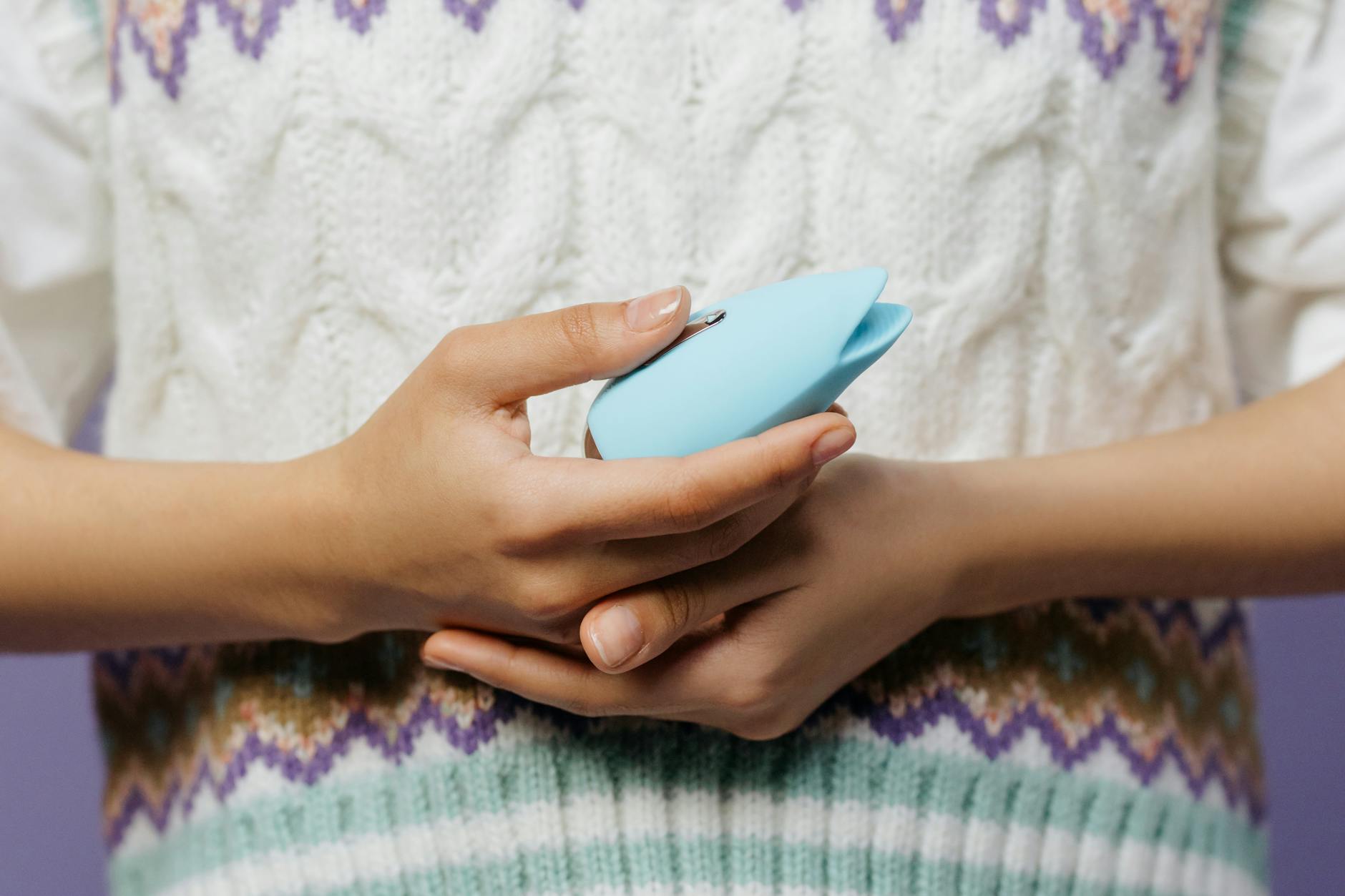
Photo by cottonbro studio on Pexels
The nervous system rewiring piece
Using a lemon vibrator consistently when your body's slow does something interesting: it teaches your nervous system that this type of input produces a response. Neuroplasticity is real. After four or five sessions, your body starts pre-emptively ramping up arousal the moment it feels that suction pattern. You've retrained the threshold.
Meanwhile, you're also interrupting the learned helplessness cycle. Months of touch that didn't build arousal taught your body to expect failure. One successful session with a lemon vibrator rewires that. Your brain gets evidence that stimulation can produce response. That's powerful.
If you're in a partnership and slow response has made sex feel like a chore, here's what's often true: your partner thinks it's their fault. It's not. And a lemon vibrator used solo—or together—breaks that blame loop. It's a tool that says "my body responds to this specific input," which is useful data for everyone.
When to recalibrate or seek support
If after four or five consistent sessions your body's still not responding, something else might be at play. Hormonal, neurological, psychological. A conversation with a therapist trained in sex and intimacy or a medical provider is worth having. Slow response sometimes signals depression, medication side effects, or relationship dynamics that a toy can't fix.
But if it's sensory habituation or simple desensitization? A lemon clitoral vibrator is the direct solution. It rewires fast.
FAQ: Slow response and lemon vibrators
Why do lemon vibrators work faster than my partner's hand?
They deliver more intensity and novelty. After months of the same touch, your nervous system filters it out as background noise. Suction—especially the pull-release-pull pattern—is different enough that your brain can't ignore it. It's not that your partner did anything wrong. It's that your sensory system got habituated. A lemon vibrator breaks that habituation.
Can I use a lemon vibrator if arousal usually takes thirty minutes or longer?
Yes. Start by using manual touch or partnered touch for the first fifteen to twenty minutes, then introduce the Lem. You're using both for their strengths: manual touch for mental arousal and connection, suction for neurological activation. Over time, you may find the Lem alone gets you there in ten minutes.
Is slow arousal response a sign my partner isn't attractive to me?
Not necessarily. Slow response is usually about your nervous system's sensitivity threshold, not desire. You can be deeply attracted to someone and still have a slow-to-activate body. That's especially true if stress, medication, or relationship patterns have taught your system to expect arousal disappointment. How to use lemon vibrators when you feel disconnected during partnered sex covers this angle more.
How many sessions before my body speeds up on its own?
Three to six, usually. Your nervous system is plastic. After a few successful experiences with intense stimulation producing response, your body learns to anticipate and pre-emptively prime itself. But consistency matters. Once a week probably won't cut it. Three to four times weekly speeds rewiring significantly.
Can I use a lemon vibrator if I also take antidepressants that slow arousal?
Absolutely. Antidepressants often flatten dopamine and norepinephrine, which flattens arousal regardless of external input. A lemon vibrator's intensity is sometimes enough to overcome that. If it's not, talk to your prescriber about dose, timing, or alternatives. But toys can genuinely help bridge medication-induced sluggishness.
Does using a stronger vibrator mean I'm becoming desensitized?
Not the way that word usually gets thrown around. You're not damaging yourself. You're matching the intensity of input to your nervous system's current needs. If later you want to dial back, you can. Sensation isn't a one-way street to numbness. Your body adapts up and down depending on what you're doing and how often.
The bottom line
Slow arousal response isn't a character flaw or a sign your body's broken. It's sensory habituation, and it's fixable. Lemon vibrators work because they deliver novelty and intensity your nervous system can't ignore. Three to six sessions of consistent use usually retrains your threshold dramatically. Your body remembers how to respond—it just needs the right input to wake up.