
Here's what disconnection actually is
You're in bed with someone you care about. Everything's fine, technically. But somewhere between undressing and the act itself, you check out. You're watching the scene from the ceiling. Your partner's touching you and you feel it, but you don't feel in it. You're thinking about the laundry, the work email, whether you closed the garage door.
This isn't lack of desire. This isn't about your partner. It's dissociation, and it's one of the most common relationship complaints I hear that couples almost never name directly.
Why this happens (and why it makes sense)
Dissociation during sex typically stems from one of three sources:
Mental load. You're carrying five conversations that didn't happen, two to-do lists, and general relationship friction. Your nervous system is already at capacity, so when sex arrives, your brain goes somewhere else.
Pressure to perform. You're thinking about how your body looks, whether you're taking too long, if your partner's satisfied. The self-monitoring loop is so loud that actual sensation barely registers.
Safety concerns (even subtle ones). Maybe there's underlying resentment, or you've noticed a pattern where your needs aren't heard. Your nervous system doesn't feel fully safe, so it creates distance.
The suction-based stimulation of a Lemon vibrator can interrupt this loop because it demands presence. Air-suction toys create a distinct sensation that's harder to tune out than penetrative stimulation. You literally have to be there to control intensity, positioning, and rhythm.
The presence-building framework
Here's what I recommend to couples who are working through disconnection.
Start with a conversation. Not during sex. Before it. Tell your partner: "I've noticed I drift sometimes, and it's not about you. I want to fix it together." This reframes the issue from blame to teamwork. If your partner feels rejected, they'll resist. If they understand you're both solving a problem, they become your ally.
Create a new ritual. Before you initiate, spend five minutes checking in: "What's one thing on your mind right now?" Just naming it helps your nervous system feel permission to let it go. Then set an intention together: "Tonight, let's focus on sensation." Small phrase, big shift.
Introduce the Lemon vibrator as a tool for grounding, not novelty. Say it plainly: "I want to try this because I want to stay present with you." Use it during partnered sex, not instead of it. The key is that you're both engaged in the sensation together.
How to use a Lemon vibrator to rebuild connection
Three concrete approaches:
1. You take the lead. Hold the Lemon vibrator yourself during partnered sex. This flips the power dynamic slightly and forces you into an active role. You can't drift when you're directing your own stimulation. Your partner can focus on everything else, and you're choosing your pleasure in real time. This is radically grounding because there's no spectating allowed.
2. Your partner holds it. Once you've built some comfort, let them direct it. This requires trust and presence from them too. They have to watch for your cues, feel the rhythm of your body, adjust based on what you need. Suddenly they're not performing in a vacuum. They're in conversation with you.
3. Alternate control. Trade off every few minutes. You take it for a bit, feeling the sensations without pressure. Then they take it, and you focus on whatever feels good in that moment. Without the stimulation as your anchor, you're forced to stay tuned in to the intimacy itself.
Each variation serves the same goal: presence. You can't zone out when you're actively involved in choreographing your own sensation.
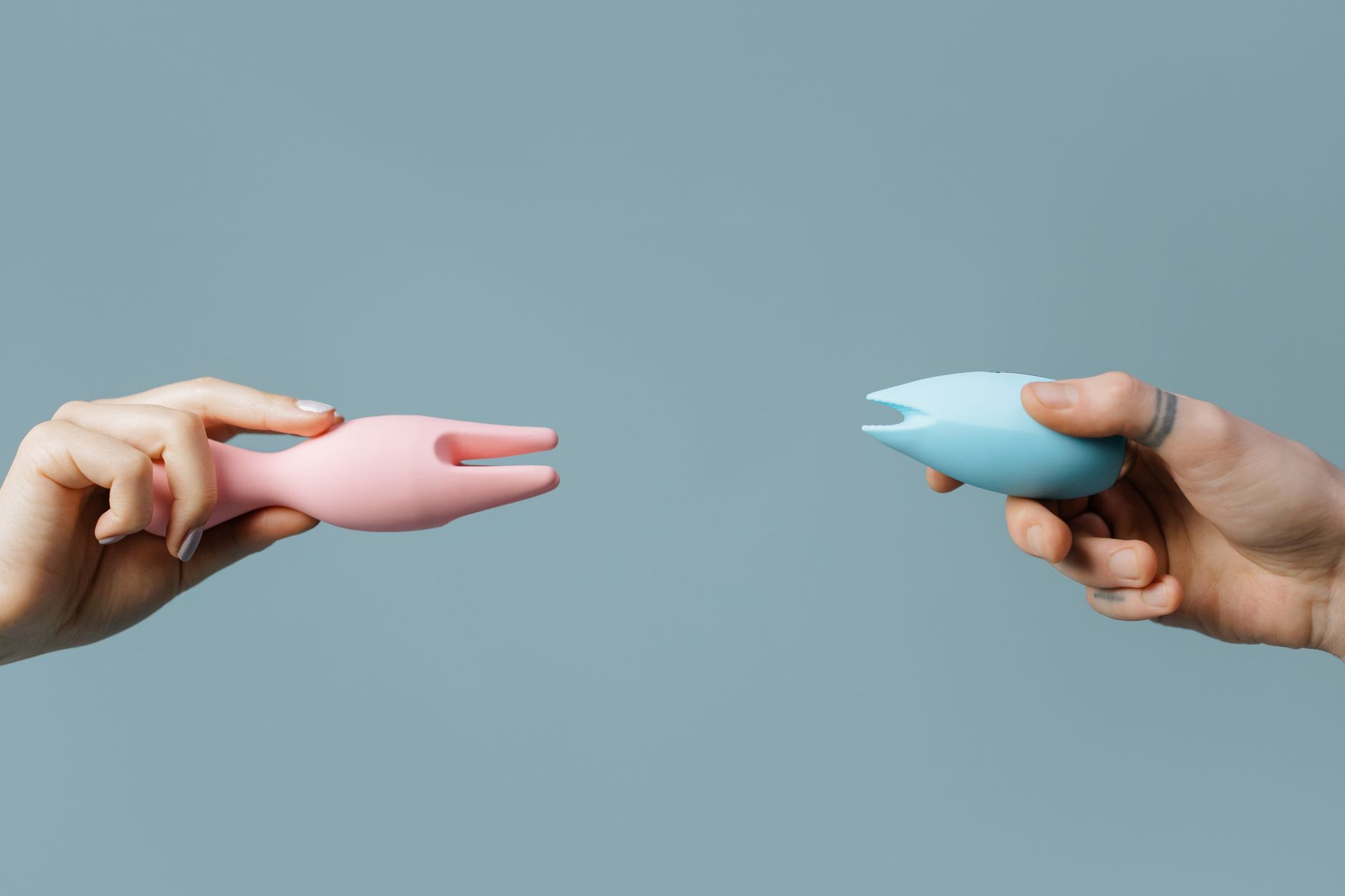
Photo by cottonbro studio on Pexels
The body-scan trick that actually works
Before and during sex, try this: mentally scan from your toes to your head, noticing five things you can physically feel. The sheets. Your partner's warmth. Your breath. Tension in your jaw. The vibration itself. Naming these sensations hijacks the dissociation reflex.
Once a Lemon vibrator is in play, add one more element: pause every few minutes. Stop moving. Just feel. This builds what therapists call "somatic awareness." You're training your nervous system to register pleasure as real and present, not something happening to someone else.
It sounds simple, but the brain is habit. If you've spent months or years checking out, you need to retrain it to stay in. Pausing and noticing is that retraining.
What to communicate to your partner
Don't say: "I need this to focus on you."
Do say: "I want to be fully here with you. Using a vibrator helps me stay present because it gives me something concrete to focus on."
Don't say: "Your touch alone isn't enough."
Do say: "Adding this tool changes how my nervous system responds. It lets me relax into sensation instead of thinking about whether I'm reacting right."
The language matters because your partner might already feel rejected or insufficient. You're not asking for something more stimulating or different. You're asking for something that helps you show up more fully. That's actually very connecting.
If your partner is resistant, that's separate work. How Lemon Vibrators Help When There's Tension in Your Relationship digs into partner resistance specifically. But in my experience, when the conversation is framed as "I want to be more present," most partners actually feel relieved.
When disconnection points to something bigger
Sometimes drifting during sex is a symptom of deeper relationship friction. If you feel consistently disconnected, and it's not just during sex, there's usually an unspoken resentment or unmet need lurking.
A Lemon vibrator can help rebuild presence in the moment. It can't fix the thing that's creating the distance in the first place. If you're resentful about housework, childcare, or emotional labor, no vibrator will change that. Those conversations have to happen separately.
Use the vibrator as a bridge back to intimacy while you're doing the actual relationship work. Not as a replacement for it.
The permission you need to hear
Feeling mentally absent during sex doesn't mean you're broken, unattracted, or damaged. It means your nervous system learned to protect you by creating distance. That's actually adaptive. Your body's been smart.
Rebuild presence slowly. Use a tool that makes it easier. Talk to your partner like an adult who wants to reconnect. And be patient with yourself as your nervous system learns that it's safe to stay.
You deserve presence. Your partner deserves to feel seen. A Lemon vibrator won't fix the relationship dynamics, but it's a genuinely useful tool for rebuilding the somatic piece while everything else catches up.
People also ask
Does using a vibrator mean I'm not satisfied with my partner?
No. Using a Lemon vibrator during partnered sex often means the opposite. It means you want to be fully present and connected, and this tool helps you get there. Some people's nervous systems need a specific input to stay grounded. That's not a reflection on your partner's desirability. It's neurology.
Can a lemon clitoral vibrator improve our emotional connection?
Indirectly, yes. If disconnection was dampening your sexual experience, rebuilding presence through a tool like a Lemon vibrator can make sex feel more intimate again. But emotional connection requires conversation and consistent care outside the bedroom. The vibrator helps the sexual piece. The real work is everywhere else.
What if my partner is uncomfortable with vibrators?
Start with curiosity instead of defensiveness. Ask why. Is it about masculinity? Feeling replaced? Cost? Once you know the actual concern, you can address it. Often partners resist because they think a vibrator means they're not enough. Reframe it as a tool for togetherness, not a substitute. How to Use Lemon Vibrators When Your Partner Is Self-Conscious About Toys walks through this conversation in detail.
How long does it take to feel reconnected?
That depends on how long you've been drifting and what's underneath it. Some couples notice a shift in two or three sessions. Others need a few weeks of consistent practice. The nervous system doesn't flip on a dime. Be patient.
Should I use a vibrator every time we have sex?
No. Use it when you notice the drift happening, or when you want to practice staying present. Eventually, you might not need it as much because you've retrained your attention. Think of it as a training wheel, not a permanent solution.
Can a lemon sucker vibrator work as well as other designs for this?
Yes. What matters isn't the design, it's that the sensation is distinct enough to keep you anchored. Some people find air-suction toys like the Lemon vibrator more grounding because the sensation is concentrated and requires active attention. Others do fine with traditional vibrators. Experiment and see what keeps you most present.