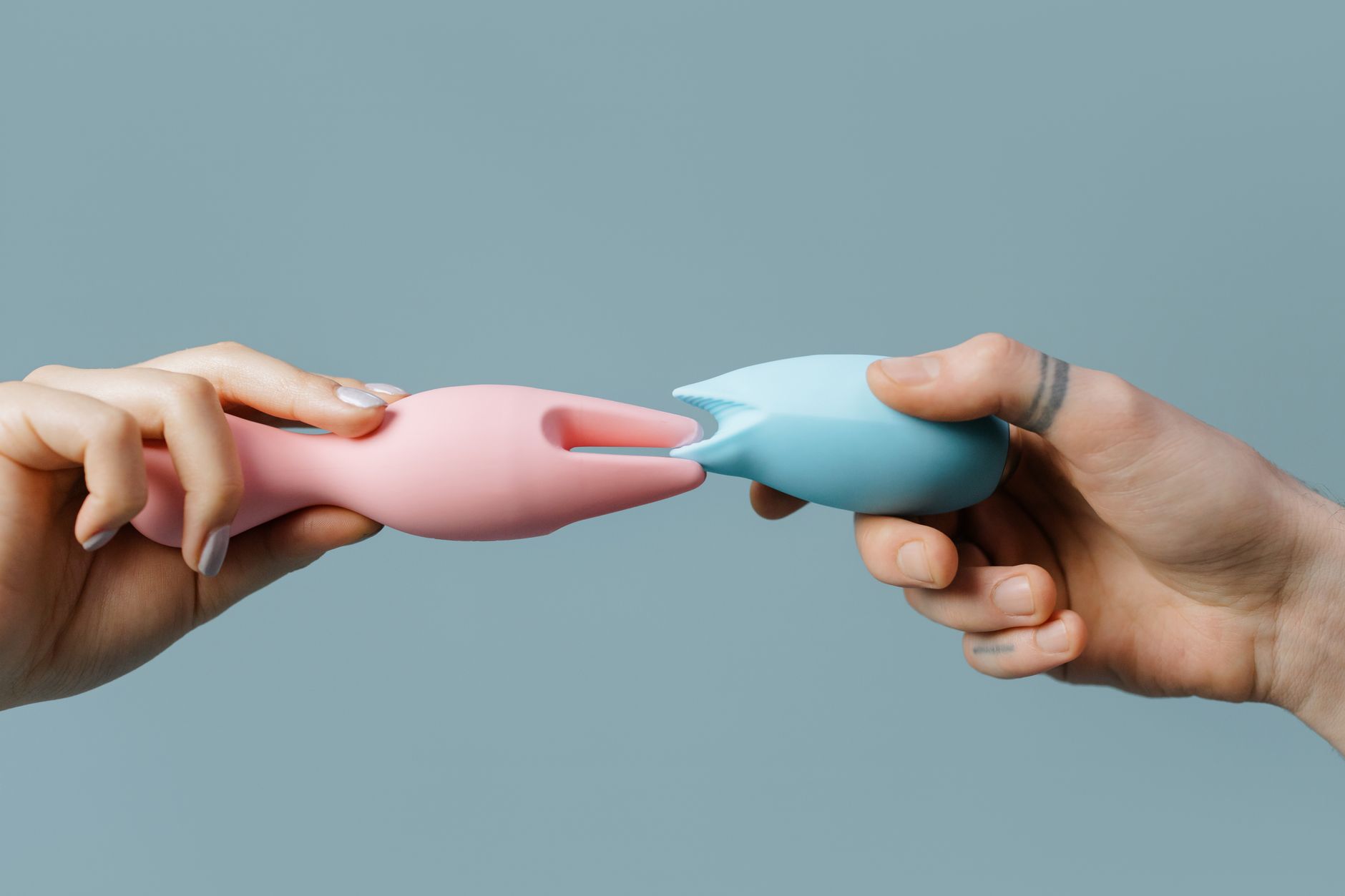
When sex becomes a test you're failing
Let's be real. Performance anxiety is not about your body not working. It's about your brain deciding that your body shouldn't work because someone is watching, judging, or waiting. The moment you think "I should be turned on by now" or "they're waiting for me to come," arousal doesn't just slow down. It stops.
This happens to everyone at some point. And it's wildly common among people who've internalized the message that their job during sex is to be responsive, enthusiastic, and on schedule. If you've spent years calibrating your pleasure around someone else's timeline, your nervous system has learned to prioritize their experience over your own. That's a hard pattern to break without help.
Here's the thing nobody tells you: lemon vibrators work so well for performance anxiety because they shift the entire frame. Instead of "Am I doing this right?" you get to ask "What actually feels good to me?"
How performance pressure hijacks your nervous system
Performance anxiety doesn't live in your head alone. It lives in your body. When you're worried about whether you're responding fast enough, intensely enough, or visibly enough, your parasympathetic nervous system (the part that handles arousal and relaxation) gets overridden by your sympathetic nervous system (the fight-or-flight part). Your cortisol spikes. Your pelvic floor tenses up. Blood flow redirects away from your genitals and toward your muscles, as if you're about to run from a tiger.
Except the tiger is just the thought that your partner might notice you're not turned on yet.
This creates a vicious loop. The more anxious you feel, the harder it is to access pleasure. The harder it is to access pleasure, the more you panic. And the whole experience becomes less about sensation and more about performance metrics you can't control.
Why lemon vibrators break the performance cycle
Air-suction lemon vibrators work differently than traditional vibration toys. They create rhythmic pulsing that stimulates the clitoral complex through gentle suction rather than direct friction. For people with performance anxiety, this matters enormously.
First, the sensation is so distinct and powerful that it's hard to ignore. When you're using a lemon vibrator like the Lemon Clitoral Vibrator, your attention has to stay on the physical sensation because it's so focused and present. You can't split your awareness between "What does this feel like?" and "Is my partner noticing whether I'm getting off?" Your brain doesn't have bandwidth for both.
Second, the suction pattern doesn't require you to do anything. You're not managing pace, depth, angle, or enthusiasm. The toy handles the work. This removes the performance element entirely. You're not proving anything to anyone. You're just receiving sensation.
Third, the stimulation is usually more effective for reaching orgasm than partner-provided stimulation, which means the experience is less likely to drag on and become frustrating. Shorter arousal time means less opportunity for anxiety to creep in.
The permission piece (this matters more than the toy itself)
Honestly, the real power of using a lemon vibrator when you have performance anxiety isn't mechanical. It's psychological.
Using a toy is a way of saying to yourself: "I'm allowed to prioritize my own sensation right now. I'm allowed to do this for me, not for anyone else." That might sound simple, but if you've spent years in relationships where your pleasure was secondary, that permission is revolutionary.
When you use a lemon vibrator, you're not performing. You're not managing someone else's experience. You're not checking in about whether they're satisfied with your sexual response. You're alone with your own body and a tool designed to help you feel something. That solitude, even if it's just five minutes, rewires what sex can mean.
Many people find that once they've reconnected with their own pleasure in a low-stakes way (alone, with no one watching, no one waiting), that confidence carries into partnered sex. You remember that your arousal belongs to you. You remember what you actually enjoy. And you stop performing.
How to use lemon vibrators to rebuild trust in your own arousal
If you're starting from a place of deep performance anxiety, here's what actually works:
Week one: solo exploration. Spend time with your lemon vibrator alone, no pressure, no timeline. You're not trying to come. You're not testing anything. You're learning what sensation feels good and where. This is data-gathering, not performance.
Week two: noticing what changes. You might find you can come more easily, or feel arousal more quickly, or notice that certain patterns feel better than others. Write it down if that helps. You're building a map of your own body.
Week three: partnered presence. If you want to include a partner, tell them you're relearning your own pleasure and you might use your toy. There's no obligation to come. There's no timeline. You're exploring what feels good, and they're present for that. That's it.
Ongoing: staying in your lane. Your partner's pleasure is their job. Your pleasure is your job. That sounds obvious, but it's radical if you've been managing both. Use the lemon vibrator as a physical reminder that your arousal is separate from theirs. It can exist independently. It doesn't have to sync up.
When to talk to a partner about this
If you're in a relationship and performance anxiety is the issue, your partner needs to know what's happening. Not because they caused it (they might not have, even if the relationship dynamics contributed), but because you need them to understand the shift.
A conversation might sound like: "I've realized I've been in my head a lot during sex, worried about whether I'm responding the way you want. I'm going to focus on what actually feels good to me for a while, and sometimes that might mean using a toy. I need you to be patient with that." Most partners are relieved. They don't want you faking it either.

Photo by cottonbro studio on Pexels
If your partner becomes defensive or unsupportive of you exploring your own pleasure, that's a separate conversation about respect and care. That's where a couples therapist or relationship coach comes in. Sex is where bigger relationship patterns show up, and sometimes the performance anxiety isn't just about sex. It's about not feeling safe to have your own needs.
The science side: why suction helps more than vibration
When you're anxious, your body is in a state of tension. Traditional vibration can feel jarring or overwhelming to a nervous system that's already activated. Air-suction technology, by contrast, creates a rhythmic pulsing that actually helps trigger the parasympathetic response. Your body interprets the pattern as "safe," and arousal becomes possible again.
There's also research on how focused stimulation reduces mental load. When sensation is this specific and concentrated, your prefrontal cortex (the part doing the worrying) has less real estate. You're not thinking. You're feeling.
Breaking free from the performance trap
Performance anxiety in sex is not something you fix with better communication alone, though communication helps. It's something you rewire by practicing pleasure without the audience. A lemon vibrator is a tool for that practice.
Once you remember what it feels like to have pleasure that's just for you, you realize you don't have to perform at all. You can just be. And that changes everything.
If this resonates and you want to go deeper on rebuilding intimacy after patterns of performance pressure, how lemon vibrators help rebuild intimacy after extended time apart covers some related territory. You might also find it useful to explore how lemon vibrators improve pleasure when you feel disconnected from your body, which digs into the embodiment piece.
People also ask
Can using a lemon vibrator make performance anxiety worse?
Not typically, but context matters. If you use it while still feeling watched or judged, you're not getting the benefits. The magic is in the privacy and permission. If you're using a lemon vibrator because a partner pressured you, or you feel obligated to perform with it, that's not going to help. You need to use it because you're choosing to explore your own pleasure, alone. Once that's the frame, it almost always helps.
How long does it take to get over performance anxiety with a lemon vibrator?
There's no timeline, honestly. Some people feel a shift in a week. Others take months. What matters is consistency and intention. You're not using the toy to fix yourself. You're using it to remember what pleasure feels like when there's no audience. That rewiring happens gradually as you practice separating your arousal from someone else's expectations.
Should I use a lemon vibrator with a partner if I have performance anxiety?
Yes, but only after you've spent some time with it alone. Once you know what the sensation feels like and you've practiced prioritizing your own pleasure, including your partner can be really helpful. It removes the pressure for them to provide all the stimulation, and it models what it looks like to advocate for your own needs. Just make sure you're doing it because you want to, not because you think you should.
What if my partner doesn't like the idea of me using a lemon vibrator?
That's worth exploring, because the resistance usually isn't really about the toy. Sometimes partners worry that a toy means they're not enough, or they feel replaced. Those are real feelings, and they deserve to be heard. But your right to explore your own body and pleasure is non-negotiable. If a partner can't support that, that points to a bigger relationship issue. This is where reaching out for support from a relationship coach or therapist can help both of you navigate it.
Can a lemon vibrator actually help me have an orgasm if anxiety has made that impossible?
For many people, yes. The focused stimulation and the removal of performance pressure creates conditions where orgasm becomes possible again. But sometimes the anxiety runs deeper. If you've been unable to orgasm for a long time and the anxiety is severe, talking to a therapist who specializes in sexual health can help identify what else might be in the way.
Is it normal to feel guilty about prioritizing my own pleasure with a toy?
Yes, and it's worth examining. If you've been in relationships where your pleasure was secondary, or you've absorbed messages that you should be selfless during sex, guilt can feel very real. But your pleasure matters. It's not selfish to use a tool to reconnect with your own body. In fact, you're a better partner when you're not performing and exhausted. You're more present when your own needs are met.