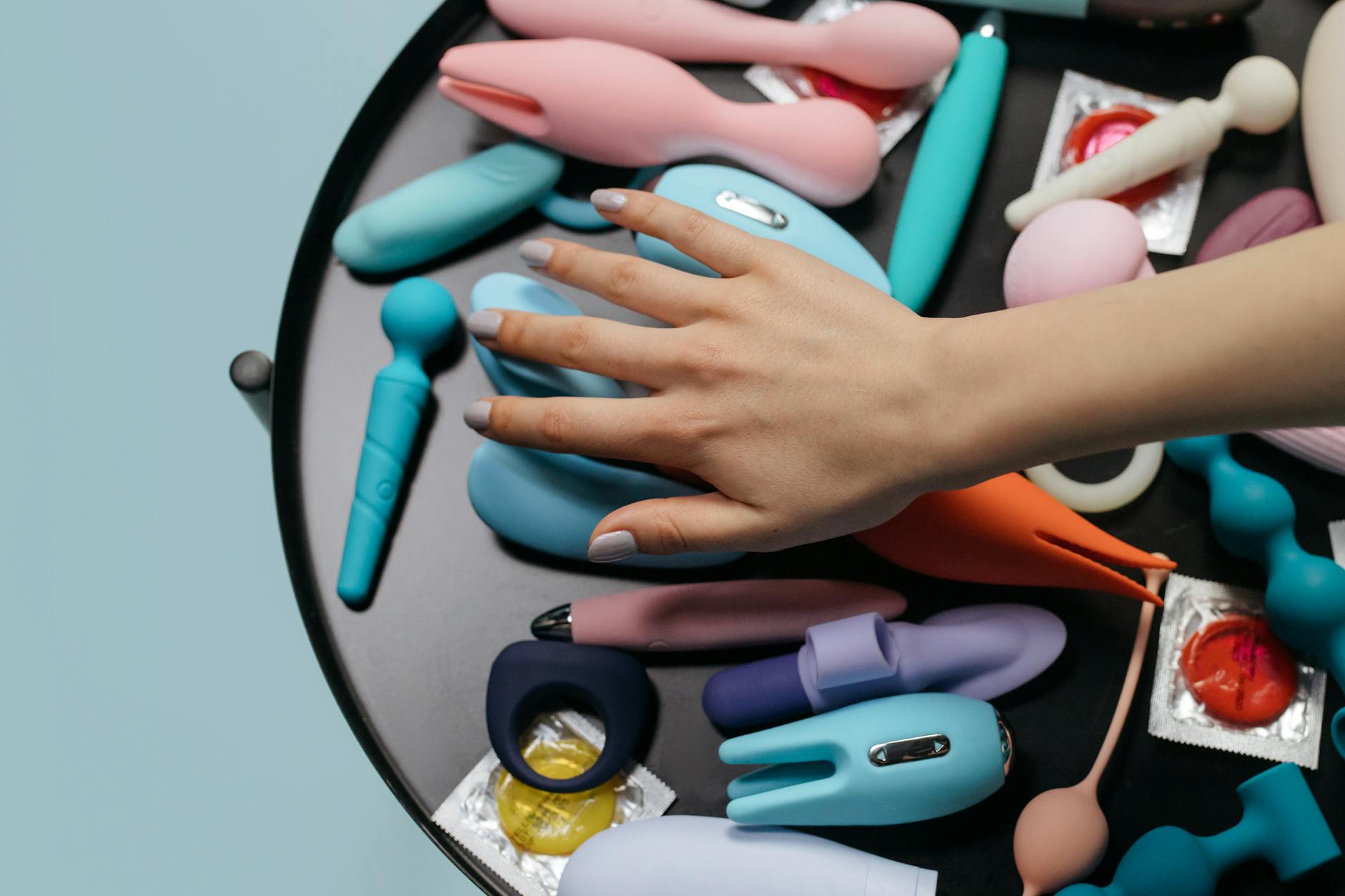
Let's start with what nobody tells you about your cycle
Your clitoral sensitivity changes throughout your menstrual cycle. Not a little. Significantly. And yet most people treat their pleasure devices like they're supposed to work the same way on day 5 as they do on day 20.
That's the whole problem. Your body isn't constant, so your tools shouldn't be either.
How your clitoral sensitivity actually shifts
During the follicular phase (menstruation through ovulation), estrogen is climbing. This means more blood flow to the clitoris, more nerve sensitivity, and a faster path to arousal. The tissue is plumper, more responsive, more forgiving of intensity.
Then ovulation hits. For a few days around day 14, clitoral sensitivity peaks. You might orgasm faster, feel more sensation overall, and tolerate higher intensity without discomfort. This is when traditional vibrators with constant, high-frequency buzz feel amazing.
Then the luteal phase begins. Progesterone rises, estrogen dips slightly, and everything changes. Blood flow to the clitoris decreases. The tissue becomes less plump. Sensitivity actually increases in some ways (you feel everything more acutely) but responsiveness decreases (it takes longer to build arousal). Direct, intense vibration can feel harsh or overstimulating.
By the luteal phase, many people report that their usual vibrator settings feel too strong, too relentless, or just wrong. So they stop using it. Then they assume the problem is with them.
It's not. It's a mismatch between what their body needs and what their toy is designed to do.
Why suction-based clitoral vibrators adapt better
Lem vibrators use air-suction technology instead of traditional vibration. That matters during your cycle in three concrete ways.
First: suction is responsive to your body, not fighting it. With a buzzing vibrator, the motor runs at the same frequency regardless of your tissue changes. It's a fixed stimulus. With suction, the sensation changes based on how your body responds. When you're less responsive during the luteal phase, suction actually encourages blood flow, which helps wake up sensation. During the follicular phase when you're already engorged, suction feels deeper and more satisfying because there's already more tissue to work with.
Second: you control the intensity more intuitively. Lemon clitoral vibrators have multiple suction patterns and intensity levels, but the sensation is graduated and smooth. You're not choosing between "too gentle" and "too much" like you might with a traditional vibrator. You can dial into exactly what feels right for where you are in your cycle. On lower intensities, it feels more like gentle stimulation. On higher patterns, it builds the sensation gradually rather than hitting you with constant force.
Third: suction doesn't create numbness over time. One reason people say their pleasure changes during the luteal phase is that constant high-frequency vibration can actually desensitize tissue, especially when that tissue is already less responsive. Suction works differently. It's rhythmic but not monotonous. Your nerves stay engaged instead of adapting to a single repetitive stimulus.
What changes each phase (and what to do about it)
If you're tracking your cycle, here's what to expect and how to use a lemon clitoral vibrator through each one.
Days 1-5: Menstruation. Cramping and lower baseline arousal for most people. Many feel less sensation in the clitoris. Use lower suction patterns, longer warm-up time, and consider adding water-based lubricant even if you normally don't need it. Your pelvic floor might be tense from cramping, so gentle, sustained suction patterns often feel better than fast, percussive ones.
Days 6-13: Follicular phase. Estrogen is rising. You'll likely feel more sensation, faster arousal, and higher tolerance for intensity. This is when you can explore the higher suction patterns on your lemon vibrator. Your body's natural lubrication increases. Play with the different intensity levels and notice how much more responsive you feel. Many people report their best orgasms happen during this week.
Days 14-21: Ovulation and early luteal. Around day 14, you hit peak sensitivity. This is often the "easy orgasm" window. Then progesterone starts rising and sensation begins shifting. By day 18-20, you might notice you need more warm-up time, lower suction intensity feels better, and the sensation is more localized or concentrated rather than full-body. This is normal. Dial back the intensity, not because something's wrong, but because your body's chemistry has shifted.
Days 22-28: Late luteal phase (PMS window). This is when most people notice the biggest gap between what their usual toy does and what actually feels good. You're less responsive at baseline, but paradoxically more sensitive to overstimulation. On a regular vibrator, this feels like a no-win scenario. With a lemon clitoral vibrator, the suction patterns let you find a middle ground. Medium intensity, longer duration, and patterns with a bit of rhythm work better than continuous buzz. Many people also find that mental arousal becomes more important during this window. You might need more fantasy or partner engagement to get there.
Why tracking your cycle changes the game
I'm not talking about fertility tracking or predicting your period. I'm talking about noticing your own pleasure patterns so you can stop fighting your body and start working with it.
Keep a one-line note in your phone for a month: what intensity felt best, how long warm-up took, whether you orgasmed easily or needed more time. No judgment, no clinical language. Just "day 7: lemon pattern 3 felt perfect" or "day 24: needed way more warm-up time." After one or two cycles, you'll see a clear pattern.
Most people report that once they notice this pattern, they stop blaming themselves for "low libido" or "sensitivity changes." They just shift their approach based on what day it is. Your pleasure doesn't get worse during the luteal phase. It just needs different tools.
That's what lemon vibrators actually do. They're not trying to deliver one-size-fits-all intensity. They're giving you the flexibility to meet your body where it actually is, not where you think it should be.
When to see a specialist about cycle-related pleasure changes
If your pleasure changes are extreme, painful, or completely inconsistent with your cycle, that's worth mentioning to a gynecologist or pelvic health specialist. Hormonal imbalances, thyroid issues, or other metabolic changes can mess with sensation in ways that go beyond normal cycle variation.
Also: if you're on hormonal birth control, your cycle variation might be much smaller or completely flattened. That's fine. You might find that one intensity level works year-round for you, or you might notice slight shifts based on the placebo week. Everyone's different.
But most people with cycles find that tracking their pleasure alongside their cycle reveals patterns they didn't know existed. Once you see the pattern, you can't unsee it. And once you stop fighting it, pleasure actually gets easier.
FAQ: Cycle-based pleasure and lemon vibrators
Q: Does my clitoris actually get bigger during my cycle? A: In a sense, yes. During the follicular phase and around ovulation, the clitoris engorges with blood and increases slightly in size and firmness. It's the same process that happens in other erectile tissue. This is why suction feels different at different points in your cycle. During the luteal phase, when engorgement decreases, the tissue is smaller and less plump, which changes how stimulation feels.
Q: Will using a lemon vibrator at different intensities during my cycle affect my body long-term? A: No. Adjusting intensity based on what feels good is actually the opposite of the desensitization problem. You're working with your body's natural fluctuations, not pushing against them. Using lower intensity during less responsive phases and higher intensity during more responsive phases means you're never overstimulating or understimulating.
Q: What if my cycle changes are super unpredictable? A: Cycle variation is normal, but extreme unpredictability can sometimes point to stress, sleep issues, thyroid problems, or PCOS. It's worth checking in with a doctor if your cycle is wildly irregular. That said, even with irregular cycles, most people find that their pleasure still varies day-to-day. A lemon clitoral vibrator gives you the flexibility to adjust based on how you feel right now, not based on what day your calendar says it is.
Q: Can I use my lemon vibrator the same way during my period? A: Absolutely. Some people prefer gentler suction during menstruation. Some want the same intensity but use it less frequently due to cramping or just not feeling in the mood. There's no rule. If it feels good, it's right.
Q: Does hormonal birth control change how my pleasure works with a lemon vibrator? A: It depends on the type. Hormonal birth control flattens or eliminates cycle variation for many people, which means you might find one intensity setting works consistently. Some people report that suction feels better on hormonal birth control because the clitoris is less engorged overall, so gentler suction is more comfortable. The best way to know is to experiment for a couple of cycles and notice what feels consistent for you.
Q: If I'm perimenopausal or menopausal, do these cycle-based tips still apply? A: No, because your cycle is either irregular or stopped. But perimenopause comes with its own pleasure changes, which are actually similar to luteal phase shifts. You might find that lower-intensity suction patterns work better than they used to. The principles are the same: your body's baseline has changed, so your tools need to adapt.
The point
Your pleasure isn't broken during your cycle. It's shifting. Once you stop expecting it to stay constant and start meeting it where it is, everything changes. Lemon vibrators actually work because they're designed to give you that flexibility. You're not stuck with one frequency. You're not fighting your body. You're just working with it.
If you want to dig deeper into how pleasure works across your whole cycle, reach out. We can talk through what's actually happening in your body and what tools might work best for you. Contact us anytime.
References & Sources
Although this article draws on well-established endocrinology and sexual health research, the specific application to pleasure technology is based on practitioner experience and user reports rather than clinical trial data. For scientific context on clitoral physiology and hormonal fluctuation:
Masters, W. H., & Johnson, V. E. (1966). Human Sexual Response. Little, Brown and Company.
Brendstrom, J., et al. (2018). "Clitoral size and the sexual satisfaction of women." The Journal of Sexual Medicine, 15(S1), S234.
Dierich, K., et al. (2009). "Immunology of reproduction." Human Reproduction Update, 15(6), 667-688.
Vaya, A., et al. (2011). "Circulating adhesion molecules, inflammation markers and hemostatic abnormality in women with polycystic ovary syndrome." Thrombosis Research, 128(2), 150-154.