Let's start with the honest part
Solo pleasure isn't something most of us were taught to prioritize. If you're here because you're curious about lemon vibrators or clitoral vibrators in general, but nervous about actually using one alone, you're not alone. The guilt, the "what if" questions, the weirdness of it all? That's the real block, not the mechanics.
Here's what I tell my clients. Your pleasure matters. Solo exploration isn't selfish or weird or something you need to apologize for. It's foundational.
Why solo exploration with vibrators matters more than you think
When you explore pleasure alone, you learn your own body without performance anxiety. There's no one watching, no timeline, no rhythm but yours. This matters because most people never get there in partnered sex. They're too busy managing someone else's experience.
There's also the practical piece. If you don't know what your own body responds to, you can't effectively communicate it to a partner. You're essentially asking someone else to guess. That's not fair to them and it's exhausting for you.
Solo pleasure also rewires your nervous system. Regular orgasms reduce cortisol, improve sleep, and lower blood pressure. They're not frivolous. They're maintenance.
The mental block is bigger than the physical one
Let's separate these because most people conflate them. The physical part is straightforward. The mental part is where people get stuck.
You might be dealing with residual messages from childhood or religion about sexuality being "dirty." You might feel self-conscious even though no one's watching. You might worry that using a toy means something about your body or your relationship. None of these worries are grounded, but they're real enough to stop you from trying.
Here's my reframe. Using a lemon vibrator is not a statement about anything except this: you deserve pleasure, and you're willing to give yourself what you want. That's it. It doesn't replace partnered sex, it doesn't mean your body is broken, and it doesn't make you complicated.
Setting up your physical space matters more than you'd think
This isn't about candles and mood lighting, though those are fine. It's about removing friction.
First, lock the door or put your phone on "do not disturb." You need actual privacy, not just the assumption of it. The moment you hear a footstep or a text ping, your nervous system shifts out of pleasure and into vigilance. That kills everything.
Second, have water nearby and a small towel. You might get a little wet from lube or natural lubrication, and you want to be comfortable. No stopping mid-exploration to grab tissues.
Third, make sure your device is charged. Running out of battery mid-session is annoying and derailing.
Fourth, use lube. Even if you're naturally lubricated, a water-based lubricant makes the experience smoother and more comfortable. Lemon vibrators and other clitoral vibrators respond beautifully to lube because it reduces friction and allows the vibrations to move more fluidly across your skin.
The practical steps for your first time
Start clothed. Seriously. Many people feel less vulnerable if they're wearing a shirt or keeping underwear on while they explore. There's no rule that says you have to be naked. Your comfort comes first.
Apply a small amount of water-based lubricant to the external area. You don't need much. A dime-sized amount is enough.
Turn the vibrator on the lowest setting. Don't go for maximum intensity right away. You're learning what your body likes, not trying to win an endurance competition.
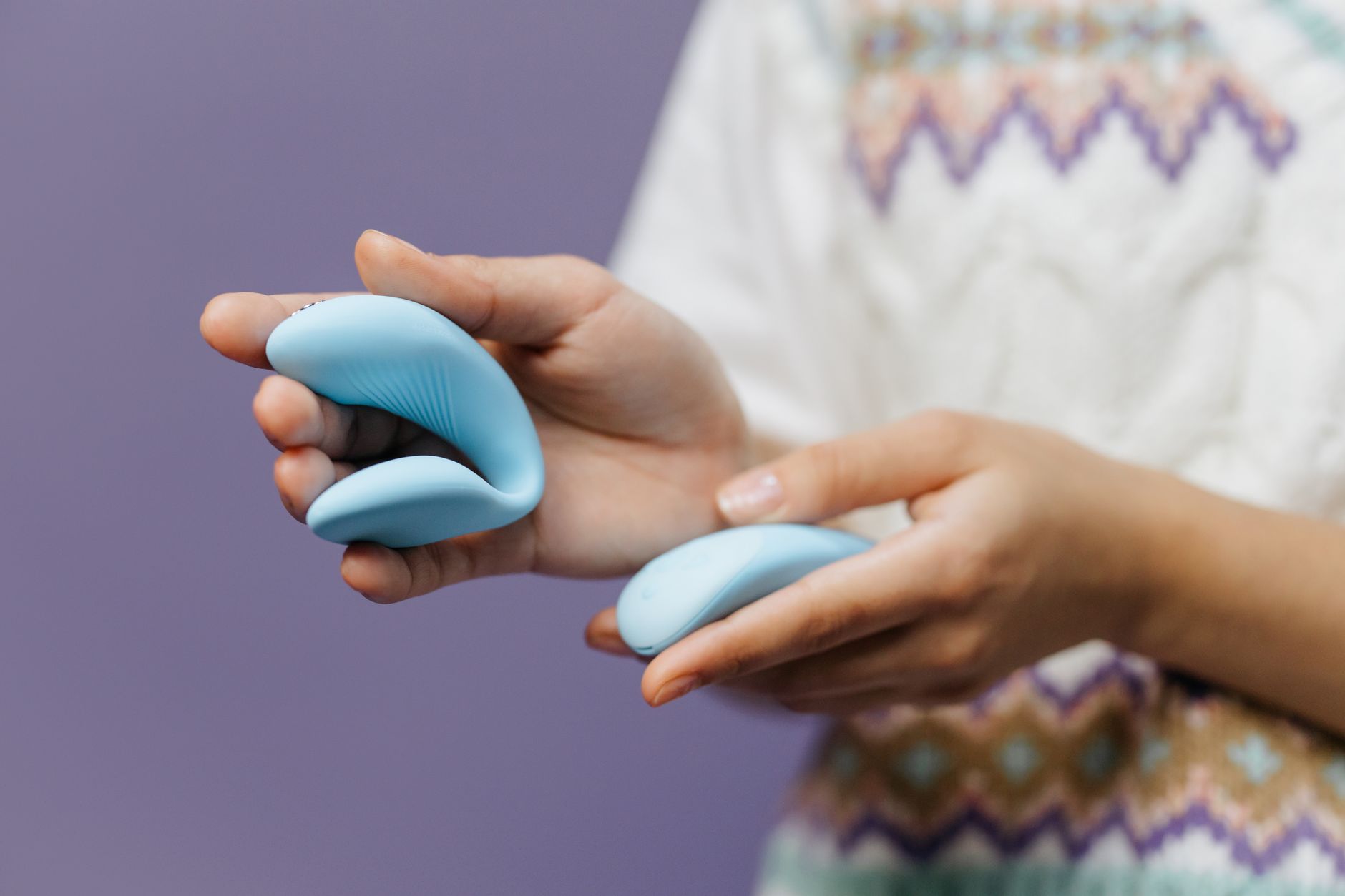
Start by exploring different patterns and intensities. Some people like sustained vibration, others prefer pulsing rhythms. The Lem vibrator offers multiple settings specifically because different people respond to different patterns. There's no "correct" one.
Notice what feels good. Not what you think should feel good. Not what you've read feels good to other people. What actually feels good to your body right now, in this moment.
If nothing feels good, that's information too. It doesn't mean you're broken or that vibrators aren't "for you." It might mean you need more time to relax, a different setting, or honestly, sometimes it just takes a few tries for your body to learn what's happening.
Dealing with the emotions that show up
Pleasure can bring up weird stuff. Sadness, anger, grief, even just feeling self-conscious mid-way through. That's neurologically normal. Your nervous system is shifting between states, and emotions live there too.
If sadness or heaviness shows up, it's not a sign to stop. It's a sign to stay curious. Many people have been taught that pleasure isn't allowed for them, and the body holds that. The first time you actually feel good, your system might release some of that old programming.
If you feel self-conscious, pause and breathe. You're allowed to take breaks. You're also allowed to talk to yourself like a friend. "This is uncomfortable and new, and I'm doing it anyway. That's brave."
What to expect after your first time
You might feel energized or relaxed or both. That's the oxytocin and endorphins. Some people feel a little emotional afterward, which is also normal. Your nervous system recalibrated.
You might also feel anticlimactic if nothing dramatic happened, or if you didn't orgasm. Not every solo session needs to end in orgasm to be worthwhile. Pleasure itself is the point, not the destination.
If you want to explore further, great. Try a different setting, try it at a different time of day, try it when you're less in your head. If you want to stop and try again in a week, that's also fine. There's no timeline.
The connection to partnered pleasure
Here's the thing nobody tells you. Solo pleasure and partnered pleasure aren't separate skills. They're related. When you know your own body, when you've experienced what your nervous system can feel without performance pressure, you bring that knowledge into partnered sex. You're less in your head. You communicate better. You're actually more present.
Many people I work with notice that how to reconnect with pleasure after years of routine sex becomes easier once they've reclaimed solo exploration. It's not because they're using toys with a partner necessarily. It's because they've broken the silence around their own pleasure.
Addressing the lingering guilt
If you're still feeling like solo pleasure is somehow wrong or indulgent, consider this. You brush your teeth daily. You exercise sometimes. You eat things because they taste good, not just because they're nutritious. You're allowed to do things that feel good to your body. This isn't different.
The guilt often comes from old cultural messages about women's sexuality being suspect or shameful. Those messages aren't truth. They're just noise. You can listen to them or you can set them down. Solo pleasure with a lemon vibrator or any clitoral vibrator is an act of reclamation.
It's also worth noting that exploring solo pleasure now, before you're in crisis mode trying to fix a relationship or cope with a difficult transition, sets you up better long term. You're learning about yourself from a place of curiosity, not desperation. That's a huge difference.
People also ask
Is it normal to feel awkward using a vibrator alone for the first time?
Completely normal. Almost everyone feels awkward their first time doing anything new, especially something vulnerable. The awkwardness usually fades after the second or third time you try. Your nervous system is learning that this is a safe activity, and once it knows that, the defensiveness drops.
How long should my first solo session be?
There's no "should." Some people explore for five minutes, others for thirty. Follow your body's cues. If you feel like stopping, stop. If you want to keep going, keep going. The goal isn't duration, it's connection with yourself.
What if I don't orgasm the first time I use a vibrator?
Organisms aren't the only measure of good sex or good solo play. Pleasure, relaxation, and exploration all matter. That said, orgasm often takes a few tries as your body learns what's happening and your nervous system relaxes enough to get there. If you don't climax, it's not failure. It's data. Try again another time, or try a different setting, or both.
Should I tell my partner I'm exploring solo with vibrators?
That depends on your relationship and what feels right for you. Some couples love sharing that information. Some people prefer privacy around solo pleasure. Both are valid. If you do decide to share, frame it as something you're doing for yourself, not as commentary on your partner or your relationship.
Can I use a lemon vibrator if I have sensitive skin?
Most lemon vibrators are made from body-safe silicone, which is hypoallergenic. That said, sensitivity varies. If you have very sensitive skin, test the vibrator on the inside of your arm first to see if there's any reaction. Always use a water-based lubricant, and if irritation occurs, stop using it and consider patch testing with an allergist.
How often should I explore solo pleasure?
As often as feels good. Some people do it weekly, others a few times a month. There's no optimal frequency, just what works for your body and your life. Consistency is more important than intensity.
The deeper point
Solo pleasure isn't selfish, weird, or shameful. It's an act of self-knowledge and self-care that actually improves your overall wellbeing, your sleep, and your capacity for connection with partners. When you explore solo, you're not avoiding relationship intimacy. You're actually preparing for better intimacy because you know yourself.
If you're still feeling blocked or if you've tried solo exploration and it's not clicking, that's also useful information. Sometimes there's emotional work underneath, or sometimes you just need to understand how your body responds to different types of touch. Either way, curiosity, not judgment, is your starting point.
Your pleasure matters. Full stop. Exploring it alone is the first step to claiming it everywhere else.