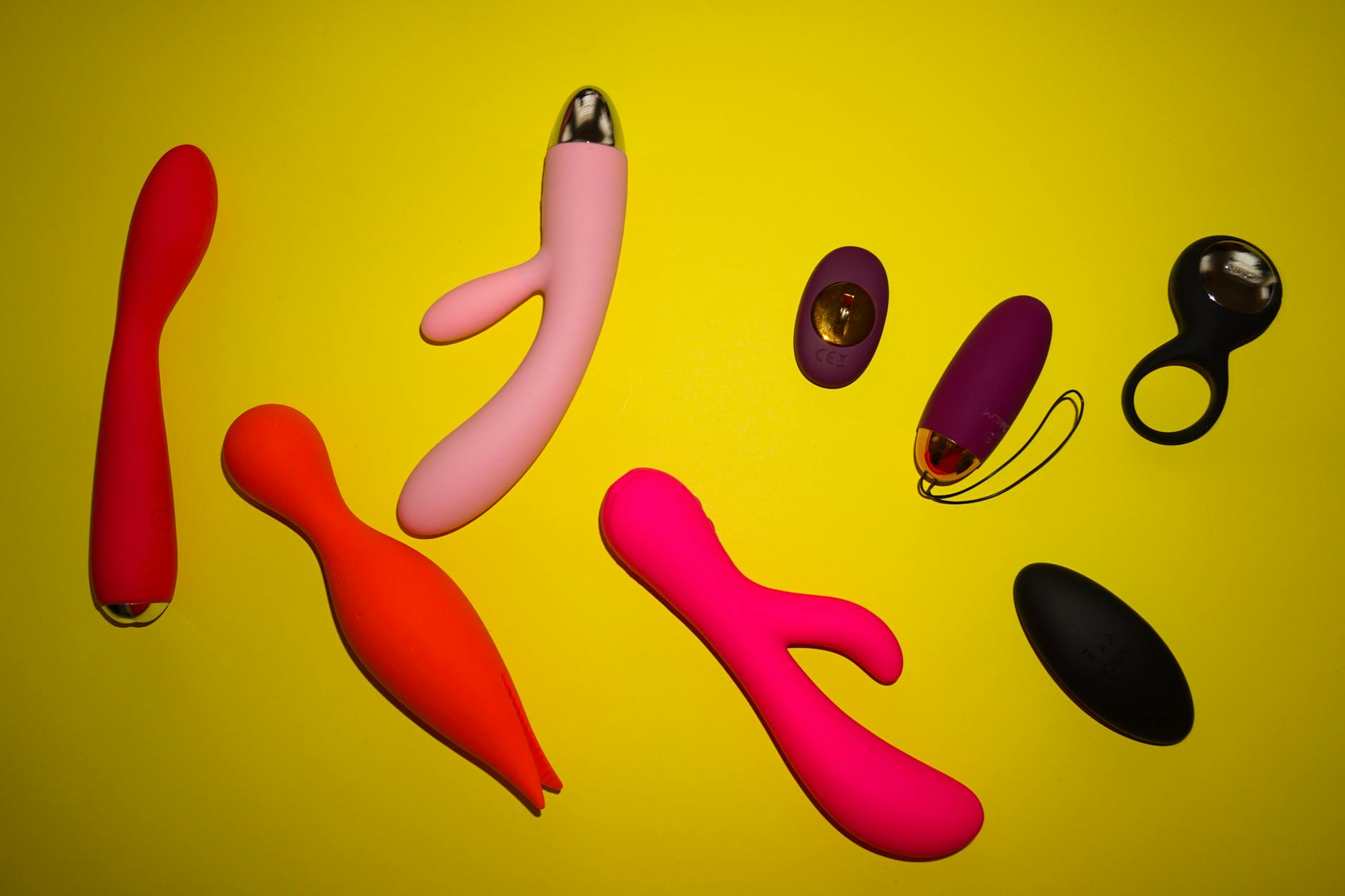
Here's the thing about solo pleasure
The guilt isn't about the act itself. It's about permission. Most of us grew up in a culture that made female pleasure feel optional, shameful, or something you only do if you're trying to fix a "problem" in your relationship. Solo pleasure without a partner in the room? That felt especially forbidden.
I work with clients constantly who can orgasm with a partner present but feel weirdly self-conscious when they're alone. Which is backwards, right. Alone is supposed to be when you feel least watched. Yet somehow the internal narrator is louder when there's no one else in the room.
Let me be direct: that narrator is lying, and you can learn to ignore it.
Where the shame actually comes from
It's not biological. Your clitoris doesn't care what story your brain is telling. The self-consciousness comes from three sources, and naming them helps you untangle them.
First, the cultural messaging. Women's pleasure has been framed as something that happens to you (a gift from a partner, a reward for being good) rather than something you actively claim. Solo pleasure flips that script. You're not waiting. You're not being given permission. You're deciding you deserve it and taking it. For people raised to be smaller, quieter, and less demanding, that can feel transgressive.
Second, the performative layer. Even alone, many people internalize an imaginary audience. You learned to perform pleasure for partners. You learned to telegraph what you want, to make sounds that signal you're enjoying it, to be legible as a good sexual partner. Solo, there's no one to perform for. And that freedom can feel weird. Like you're doing it wrong because no one's watching.
Third, the shame spiral. Once you feel a little awkward, you start narrating yourself. "This is weird." "I'm being weird." "Why am I being so weird." The self-consciousness feeds on itself. One small moment of discomfort turns into a whole story about you being broken or strange.
None of that is about your body or lemon vibrators. It's about permission and narrative.
The actual barrier: not your body
Your clitoral sensitivity is exactly the same alone as it would be with a partner. The Lem's suction technology works the same. Your nervous system responds the same. What changes is the headspace.
I work with couples and individuals, and I can tell you that the people who report the most satisfying solo sessions are the ones who reframed the whole thing. Not as "me time" (which sounds like a spa day, low-key depressing). Not as something you're doing because your partner can't. But as your pleasure. Full stop. Non-negotiable. As important as sleep or exercise.
The reframe sounds simple, but it's powerful: solo pleasure is not a substitute for partnered sex or a sign that something's wrong. It's a distinct experience, with its own texture and value.
How to actually let go
Here are the moves that work:
Name the narrator and don't believe it. That critical voice saying "this is weird" or "you're taking too long" is not the truth. It's an old recording. When you catch yourself doing it, actually say back to it: "That's not true. My pleasure matters." Sounds weird? It works. You're reprogramming by contradiction.
Start small and private. You don't need the whole setup perfect to start. You just need to not be interrupted. A closed door, headphones on so you can't hear the house, permission to take 20 minutes. That's it. You're not staging a photo shoot.
Focus on sensation, not performance. Here's where a lemon vibrator helps beyond just the physical part. Suction is a really different sensation from friction. It's novel enough that it pulls your attention into your body instead of your head. You're less likely to narrate yourself when you're genuinely surprised by what you're feeling. Start on a low pattern (like pattern 1 or 2 on the Lem) and let your brain track the sensation instead of the story.
Set a timer and give yourself real time. Arousal takes longer when you're not being touched by someone else. Budget 20-30 minutes minimum. A timer actually helps because it gives you permission to stop thinking about the clock. You're not "taking too long". You've got time. Use it.
Music helps. Not romantic music. Whatever focuses your attention away from self-consciousness. Some people use instrumental stuff. Some put on a podcast and use it as white noise. The goal is to break the silence where the narrator gets loud.
What the shame actually costs you
I'm going to be clinical about this for a second because I think it matters. When you're self-conscious, your nervous system is in a low-level stress state. Your breathing gets shallower. Your muscles stay partially tensed. Your clitoris responds to touch better when you're relaxed. Orgasm happens faster when your pelvic floor isn't braced. You literally feel less when you're uncomfortable.
So the shame doesn't just feel bad emotionally. It dulls the physical sensation. You're working harder and getting less reward. Which then confirms the lie that something's wrong with you. It's a cycle.
Breaking it means interrupting the self-consciousness early and often.
When to get a partner involved (if you want to)
I'll say this clearly: you don't need to. Solo pleasure doesn't need to become partnered pleasure. But some people find that having a partner who knows they're taking solo time, and who respects that boundary, makes it easier to actually relax. The accountability helps.
Others find the opposite, that knowing a partner is in the house makes them feel more watched, not less. Both are completely normal. Pick the scenario that lets you actually breathe.
If you're in a relationship and you want to eventually share this with a partner, start alone first. Get comfortable. Build confidence. Then if and when you're ready, you can show them what you like. How to Rebuild Desire With Your Partner After Years of Disconnection has more on that conversation.
The real permission slip
Your pleasure is not extra. It's not optional. It's not something you earn by being a good partner or a good person. It's baseline. Your clitoris has 8,000 nerve endings. They're there for a reason. Using them, alone, with a tool designed for that, is not selfish or sad or weird. It's you using your body the way it was made to function.
Every time you use a lemon vibrator solo, you're also teaching your nervous system something: I deserve this. My pleasure matters. I don't need permission from anyone else. That's not a small thing. That's practice in self-advocacy that ripples into the rest of your life.
Start small. Give yourself real time. Use sensation to interrupt the narrative. And then just let yourself actually feel good. You're not broken. Your body's not broken. The shame was never about you.
People also ask
Is it normal to feel weird about solo pleasure with a vibrator?
Completely normal. Most people report some initial awkwardness, especially if they grew up with messages that female pleasure was shameful or optional. That self-consciousness fades fast once you give yourself a few sessions without judgment. You're rewriting an old script, and that takes repetition, not perfection.
How long should a solo session last with a lemon vibrator?
There's no "should." Some people take 15 minutes. Others take 45. What matters is that you're not rushing yourself. If you're new to this, budget at least 20-30 minutes so you're not watching the clock. Arousal builds slower when you're not being touched by someone else, so time pressure actually works against you.
Will using a lemon vibrator alone change my sexuality or make partnered sex less satisfying?
No. Solo pleasure and partnered pleasure are different sensations serving different purposes. One doesn't replace the other. In fact, people who feel comfortable with their own bodies and arousal patterns often report better partnered sex because they know what they actually like and can communicate it.
What if I can't orgasm the first time I try solo?
That's really common, especially if you're used to having a partner involved. Your nervous system needs time to adjust to a new scenario. The goal isn't the orgasm on session one. The goal is to practice being alone in your body without judgment. Orgasm will come once you relax. And if it doesn't on session five or ten, that's still not a failure. You're building a practice, not chasing a result.
Is there a "best" lemon vibrator for solo use?
The Lem's suction technology is designed specifically to reduce the pressure sensation that makes some people self-conscious about firmness or friction. The gentler stimulation can make it easier to relax mentally because your body isn't braced for intensity. But the best vibrator is the one you'll actually use. If something feels good, use that.
How do I stop thinking about judgment while I'm alone?
That narrator isn't going away on its own. You have to actively interrupt it. Name it when you notice it ("There's the shame story again"). Contradict it ("That's not true. My pleasure matters"). Use distraction like music to pull your focus into sensation instead of the story. And repeat. You're building new neural pathways, and that takes practice.
You actually deserve this
I've spent two decades working with people on relationships, and I can tell you that the ones who feel most confident, most satisfied, and most connected to their partners are the ones who are also comfortable with their own pleasure. Alone. No audience. No excuses. It's not selfish. It's foundational.