How to Use Lemon Vibrators When You Have Difficulty Reaching Orgasm With a Partner
The gap between solo orgasms and partner-assisted ones is real. Here's exactly how to bridge it with a clitoral vibrator, clear communication, and zero pressure.
You can orgasm alone in five minutes. But with your partner? Twenty minutes, forty minutes, sometimes not at all. This isn't a sign something's wrong with you. It's a sign something's different about the context. And that difference is entirely manageable.
The shift from solo pleasure to partnered pleasure involves more than just physical sensation. It's mental load, performance anxiety, different pacing, vulnerability, and sometimes the simple fact that you're not in control of the stimulation. A lemon vibrator paired with the right conversation strategy can short-circuit most of these friction points.
I've worked with hundreds of couples where one partner struggles to orgasm with the other present. The pattern is always the same: frustration builds, one person feels like they're failing, the other feels rejected, and intimacy contracts instead of expands. Using a clitoral vibrator in this context isn't a workaround. It's a direct line back to pleasure.
Your body doesn't lie. When you're alone, you control rhythm, pressure, timing, and your own thoughts. With a partner, you're managing their presence, their pace, their expectations, and the story you're telling yourself about whether you should be able to finish.
There's also a mechanical mismatch. Most partnered sex is designed around penis-in-vagina or penis-in-mouth stimulation. Neither of these reliably targets the clitoral stimulation that most people with vulvas need for orgasm. You're essentially trying to finish a puzzle with the wrong pieces while someone watches.
Add performance pressure on top. "Am I taking too long?" "Is my partner getting bored?" "Should I just pretend?" These thoughts are arousal killlers. They create a feedback loop where difficulty becomes certainty.
Before you introduce a lemon vibrator into partnered sex, have the conversation when you're both clothed and not in bed. This matters. A lot.
Say something like: "I love sex with you. And I notice I finish more reliably when I'm alone. That's not about you. It's about me managing different things at once. I want to try using a vibrator together to see if that helps me relax more. I want this to feel good for both of us."
Then listen. Your partner might feel relieved, nervous, rejected, or excited. All of those are valid. A good response from them sounds like: "Okay, let's figure this out together." A response that signals potential trouble: "If you need a vibrator, I must not be doing enough."
If your partner expresses doubt or insecurity, don't argue. Instead: "This isn't about what you're not doing. This is about what works for my body. I want you involved in this." That last sentence is key.
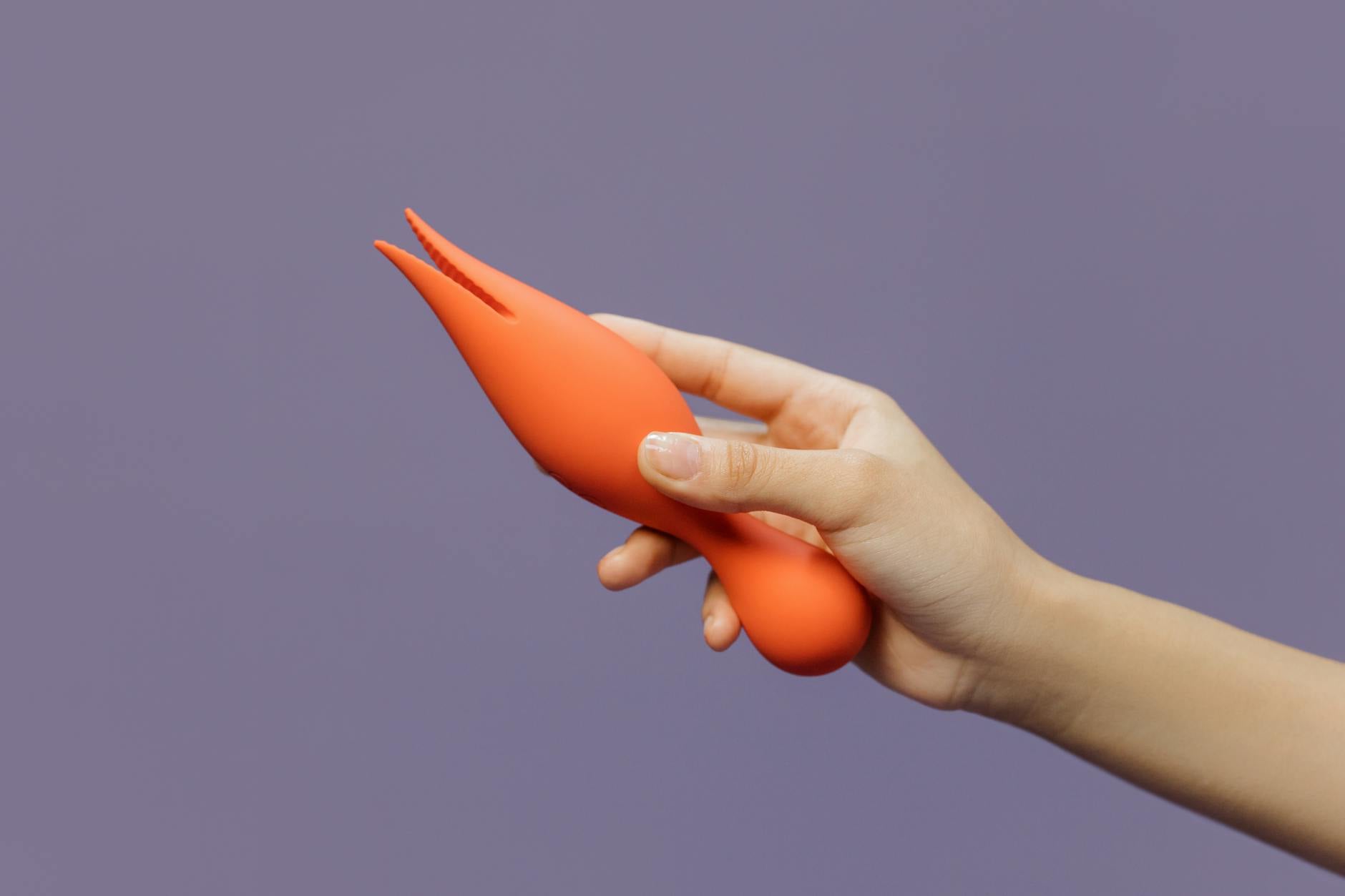
The Lem is designed for clitoral stimulation, which makes it perfect for this context. The suction-based sensation feels different from manual touch, which actually helps some people relax because it's clearly a tool, not a comparison to your partner's skill.
Start with a standard pattern that feels good to you solo. Settings 1 through 3 are usually best when you're partnered because they give you room to notice what else is happening without being overwhelmed.
Your partner can be present in several ways:
Option 1: Full collaboration. Your partner is inside you (or engaging in whatever form of partnered sex you enjoy) while you use the Lem on your own clitoris. They can adjust their pace to match yours. This often works better than you trying to coordinate both things alone.
Option 2: Hand-holding and presence. Your partner is beside you, touching your body non-genitally, maintaining eye contact or physical closeness while you use the Lem. This keeps the connection while removing the pressure for them to "do" the stimulation.
Option 3: Gradual introduction. Your partner is present but not in contact while you use the vibrator. They watch. Some couples find this builds arousal for both partners. Others find it awkward at first. Honest feedback either way is fine.
Start with whichever feels least loaded. For most people, Option 2 is the least intimidating because it splits the work and the sensation.
Here's what stops most people: they get close to orgasm, then think "Oh god, they're about to see me come, this is weird" and drop right back down.
One fix: agree beforehand that you might need to close your eyes. Or look away. Or ask your partner to look away for a moment. This isn't rejection. It's the exact neurological space you need to tip over. Your partner can understand this as "she's focusing," not "she doesn't want me here."
Another fix: talk during. "That's good, keep going like that." "I'm close." "Don't change anything." This removes guesswork and keeps your partner engaged without the pressure of figuring you out solo.
If you do reach orgasm, let it be what it is. Some partner-assisted orgasms are intense. Some are quieter. Both are real. The point isn't performance. The point is finishing.
Sometimes it takes three times before the nervous system settles. Sometimes it takes ten. Sometimes the pattern is so entrenched that you need to rebuild from the ground up.
If weeks go by with no change, consider whether the issue is purely physical or whether there's relational tension underneath. If there's resentment, broken trust, or unresolved conflict with your partner, even the best lemon vibrator won't fix the orgasm problem because the real problem isn't about sensation. It's about safety.
If that's the case, therapy or coaching (for you alone or as a couple) might be the actual first step. Once the relationship foundation is solid again, the vibrator becomes what it's meant to be: a tool for pleasure, not a problem-solving device.
Using a clitoral vibrator with your partner isn't a compromise. It's not settling. It's not admitting defeat. It's choosing pleasure over performance, communication over assumptions, and integration over pretense.
Your orgasm matters. Your partner's willingness to support that matters more. A lemon vibrator is just the vehicle.
Yes, genuinely. Most people with vulvas need clitoral stimulation to orgasm, and most forms of partnered sex don't provide that naturally. A survey by the Journal of Sexual Medicine found that over 60 percent of people use vibrators during partnered sex or have considered it. You're in the majority, not the exception.
Some partners do initially, but that usually signals insecurity they need to work through, not a problem with you using a tool. If your partner frames a vibrator as a threat instead of an enhancement, that's worth a deeper conversation about trust and what sex is actually for. It's not a performance evaluation. It's connection.
Absolutely. Many people find this easier because the dual sensation and the presence of their partner's body creates a sense of closeness while the vibrator handles the specific clitoral work. Start slow, communicate about rhythm, and see what your bodies want to do together.
However long it takes. If you orgasm in fifteen minutes, that's great. If it takes thirty, that's fine too. Time is arbitrary. Pleasure is the point. Setting a time limit actually works against you because it creates the exact performance pressure that makes orgasm harder.
Then your partner needs to do their own internal work around insecurity and control. You're not responsible for managing their feelings about your pleasure. You can be compassionate and patient, but you can't fix someone else's insecurity. They have to choose to move through it.
Only if you want to. Some couples love this level of detail and experimentation. Others prefer to keep some things private. Neither is wrong. Privacy and partnership aren't opposites.
The gap between solo pleasure and partnered pleasure closes fastest when someone stops trying to jump it and instead builds a bridge. A lemon vibrator, honest conversation, and permission to prioritize your own sensation are the materials. Your partner's willingness to show up is the foundation. Everything else follows naturally from there.
If you're struggling to make this work, reach out. Coaching or therapy can help both of you move past the friction points and back to actual connection. You deserve partnered sex that feels good to you.