Let's name the thing nobody says out loud
You're lying there, and the clock is ticking. Maybe your partner is waiting. Maybe you're aware of time slipping by and thinking you should be done by now. Maybe there's this low-grade pressure that turns arousal into a task, and suddenly the thing that's supposed to feel good feels like a performance you might fail.
Here's what I see in my practice: most people who feel rushed during solo pleasure aren't actually being rushed by anyone. They're rushing themselves. They've internalized an invisible deadline that doesn't exist.
Where the rush comes from
Performance anxiety isn't unique to partnered sex. Solo pleasure can trigger it too, especially if you've been conditioned to believe your pleasure should be efficient, brief, or contained to a specific window.
Three common sources:
1. Learned patterns from early sexual experience. If your first encounters with masturbation happened in a context where you needed to be fast (roommate might come home, family nearby, stolen time), your nervous system learned that speed equals safety. That pattern doesn't evaporate just because you're an adult with privacy now. Your body still believes the deadline.
2. Partnership dynamics. Even in relationships where your partner is explicitly supportive of your toy use, there's often an unspoken assumption that solo play should be a side quest, not the main event. A quick thing before bed. Something you do while they're in another room. The message, intentional or not, is that your orgasm is a discrete event to be scheduled, not an experience to be savored.
3. Cultural narratives about "normal" sex. Most media depictions of orgasm are under 30 seconds. Porn has trained us to expect a specific arc: build-up, peak, done. When your actual arousal takes 15 minutes to build and feels diffuse rather than linear, you start thinking something's wrong with you. The pressure to match the template can override the actual sensation.
The result: your nervous system stays partially locked in fight-or-flight, which makes deep pleasure impossible.

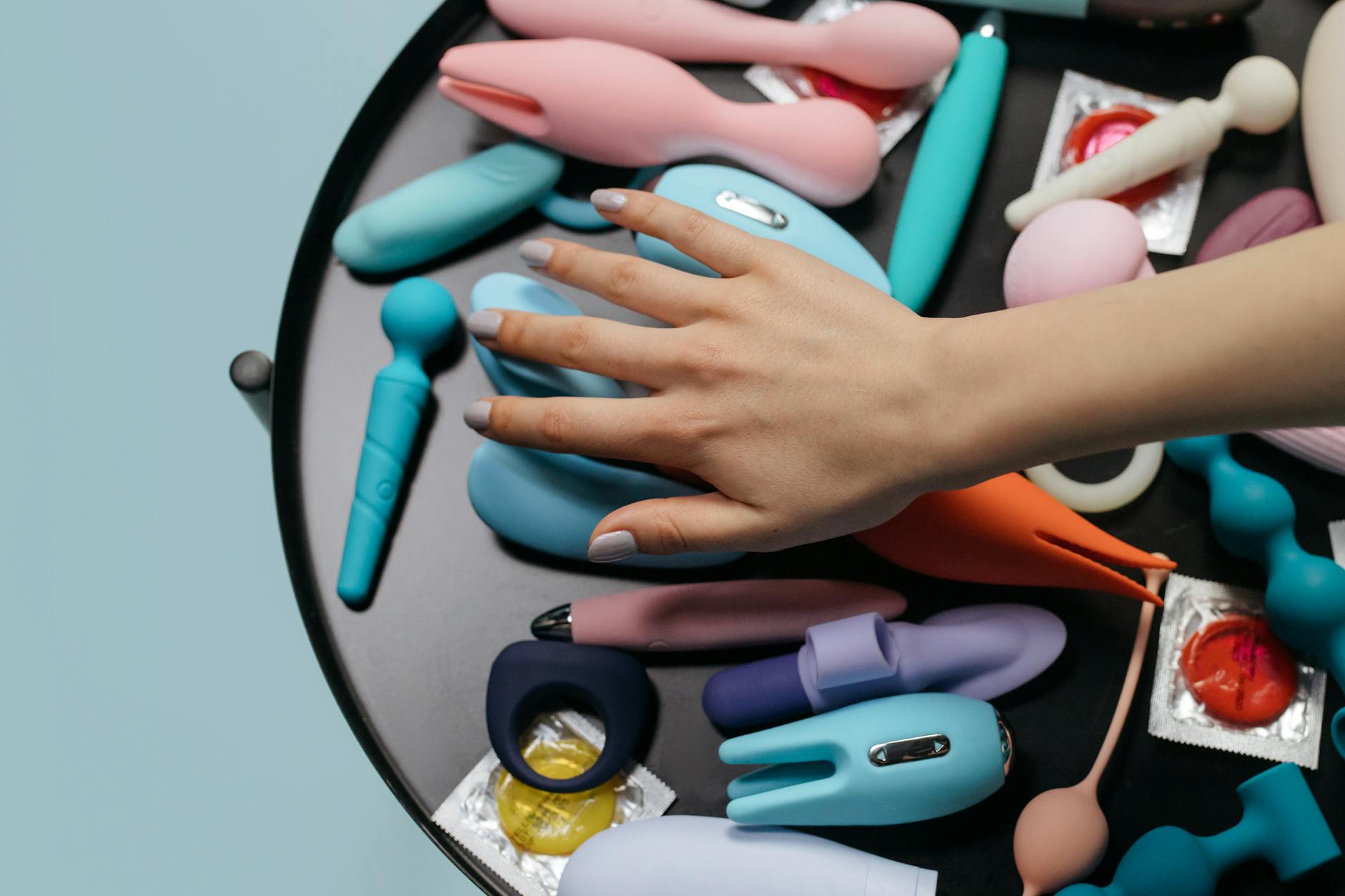
Photo by Madison Inouye on Pexels
Why suction vibrators change this equation
Here's something interesting: lemon vibrators and other clitoral suckers work differently than traditional vibrators, and that difference is key to slowing you down.
Most vibrators require active engagement. You have to position them, adjust pressure, maybe move them slightly. That mechanical interaction can accelerate arousal faster, which paradoxically increases the pressure to keep pace with the sensation and reach orgasm before the momentum drops.
With suction toys like the Lem vibrator, the mechanism is gentler and more passive. You position it, turn it on, and the suction does the work. You're not chasing the sensation. Instead, you can actually stay present with it, notice how it builds in waves rather than as a linear climb.
Most importantly, suction changes your internal permission. There's something about the passivity of it that signals to your nervous system: this isn't a task you have to execute. This is something happening to you, which is fundamentally different from something you're doing.
The actual strategies that work
Remove the timer. This sounds basic, but I mean it literally. If you typically pleasure yourself on a timeline ("before bed", "before my partner gets home"), experiment with doing it at random times when you have zero schedule pressure. Notice the difference in how your body responds when there's genuinely nothing waiting.
Set an intention that's not about finishing. Instead of "I'm going to masturbate", try "I'm going to spend 20 minutes noticing what feels good right now." The first framing makes the orgasm the goal. The second makes pleasure the goal, and orgasm is optional. This small language shift rewires what your nervous system is actually seeking.
Use the lemon vibrator on lower settings for longer. Start at pattern 1 or 2 instead of jumping to patterns 3 or 4. Let yourself stay in the arousal phase for a long time. Notice how the sensations change minute by minute. A lot of people rush to higher intensity because they assume that's how you reach orgasm, but actually, slower buildup often creates more intense release.
Build in pauses. Turn off the vibrator for 30 seconds every few minutes. Notice what happens to the sensation. Often, the pause actually intensifies arousal because your nervous system isn't constantly stimulated. It's a rhythm thing.
Change your environment slightly. If you always pleasure yourself under the same conditions, your brain enters a habitual state that can feel rushed. Light a candle. Change rooms. Do it at a different time of day. Novel environments naturally slow down your nervous system because you're more present.
When you're with a partner, talk about it differently
If the rush is partly about partnership dynamics, this is worth addressing. But be specific.
Instead of: "I feel rushed" (which most partners will hear as "you're doing it wrong").
Try: "I want to explore what it feels like when I slow way down. Can we try it without any goal other than me noticing what I'm feeling?" And then actually remove the goal. No "finish by this time". No checking in on whether you're close. Just presence.
Most partners are actually relieved when you frame it this way because it removes the pressure from both sides. Sex becomes an experience instead of a task with a deadline.
The deeper work
If this pressure is pervasive and you notice it showing up across contexts (not just solo play, but also partnered sex, exercise, other areas of your life), that's a sign to explore where the perfectionism is rooted.
I often see it in people who were raised with achievement-oriented messaging, or who grew up in chaotic environments where being "quick and efficient" meant safety. Your body learned that slow equals vulnerable.
This isn't something a toy can fix alone. But a toy that's designed for slower, more passive engagement (like lemon vibrators with their suction mechanism) can help your nervous system practice what slowing down actually feels like.
Then the internal work becomes easier. You're not fighting muscle memory. You're building new neural pathways around pleasure being something that doesn't have to be rushed.
Common questions about pressure and pace
Does using a lemon vibrator on lower settings mean I won't have an orgasm?
Not at all. In fact, most people find that lower-intensity, longer stimulation creates more intense orgasms than quick high-intensity ones. The nervous system needs time to build charge. Going slow doesn't prevent release. It usually deepens it.
Is it normal to feel anxious about "taking too long"?
Completely. It's one of the most common things I hear. The irony is that the anxiety itself is what actually prevents orgasm. Parasympathetic activation (the relaxed state you need for pleasure) is incompatible with performance pressure. Naming it, as you're doing now, is the first step toward changing it.
Can I use a clitoral vibrator if I'm with a partner who hasn't tried toys before?
Absolutely. This is a conversation separate from the tool itself. But here's what helps: frame it as something about your own pleasure, not about their inadequacy. "I want to explore what this feels like solo" is different from "I need this because you can't get me there." The first invites curiosity. The second triggers defensiveness. For more on this, see how to use lemon vibrators with partners who have never tried toys before.
What if I still feel the rush even when I'm alone with no schedule?
Then it's likely deeper nervous system patterning. This is worth exploring with a therapist who understands sexuality. You might also find it helpful to practice grounding techniques before play: box breathing, noticing five things you can see, naming sensations in your body. These shift your nervous system out of alert mode.
How long should pleasure actually take?
Whatever it takes. There's no normal. Some people arrive at orgasm in five minutes. Some take 45. Suction vibrators work well for people across that spectrum because you can stay with them at any pace. The goal isn't fitting a timeline. It's finishing when your body is actually ready, not when your brain thinks you should be.
Can the pressure to finish quickly actually prevent orgasm entirely?
Yes. Performance anxiety is one of the top reasons people struggle to climax. The nervous system is in partial fight-or-flight, which actively inhibits orgasmic response. This is why slowing down and removing the goal often paradoxically makes orgasm more achievable.
What actually changes
When you stop rushing, pleasure transforms. You notice more. Arousal becomes a landscape you're exploring instead of a mountain you're trying to climb as fast as possible.
With a lemon vibrator, you get the added benefit of a mechanism that supports that pace naturally. Suction doesn't demand that you accelerate. It lets you stay present.
Start with one change: next time, remove the timeline completely. Tell yourself there's no deadline. Notice what happens to your breathing, your arousal, your willingness to stay with sensation. That data is more useful than any advice I could give you.
Your pleasure is not a chore to be completed. It's something you deserve to actually feel.