
Here's what emotional disconnection actually looks like in bed
You're lying next to someone you love and you feel miles away. Sex happens or doesn't happen, but either way it feels like you're both going through a script someone else wrote. There's no eye contact. There's no playfulness. There's no sense that the other person is actually seeing you.
This isn't the same as mismatched desire or sexual dysfunction. This is loneliness inside a relationship. And it's one of the most painful places to be because you have a partner and somehow that makes the isolation worse, not better.
Here's the thing I need you to know: bringing a lemon vibrator into this moment isn't about pretending the emotional work away. It's about creating a controlled space where vulnerability becomes possible again.
Why disconnection kills desire (and why toys help break that cycle)
Emotional intimacy and physical pleasure are neurologically linked. When you feel unseen by your partner, your nervous system doesn't relax enough for arousal to build. Your brain is too busy protecting itself.
But here's the unexpected part. Sometimes introducing a lemon vibrator into partnered sex actually reduces performance pressure in a way that opens the door back to connection.
Why? Because when you're using a clitoral vibrator, the focus shifts. It's not about whether penetration feels good or whether you're orgasming at the "right" pace. The vibrator handles stimulation reliably. What's left is the space between you two. And that space is where emotional reconnection actually happens.
The conversation before anything else
Seriously. Do not bring a lemon vibrator into bed with someone you're emotionally disconnected from without talking about it first.
This conversation isn't about the toy. It's about naming the distance. "I've been feeling far from you and I miss us. I want to try something that might help us both feel less pressure and more present. Would you be open to that?"
That's the entire ask. You're not asking them to fix anything or feel any particular way. You're naming what's true and inviting them into something new.
If they say no, the answer is probably "I need us to see a couples therapist first." Because a toy can't bridge the gap if someone isn't willing to do relational work. But often, when the ask is framed as "let's try to reconnect" instead of "you're failing me," the answer is yes.
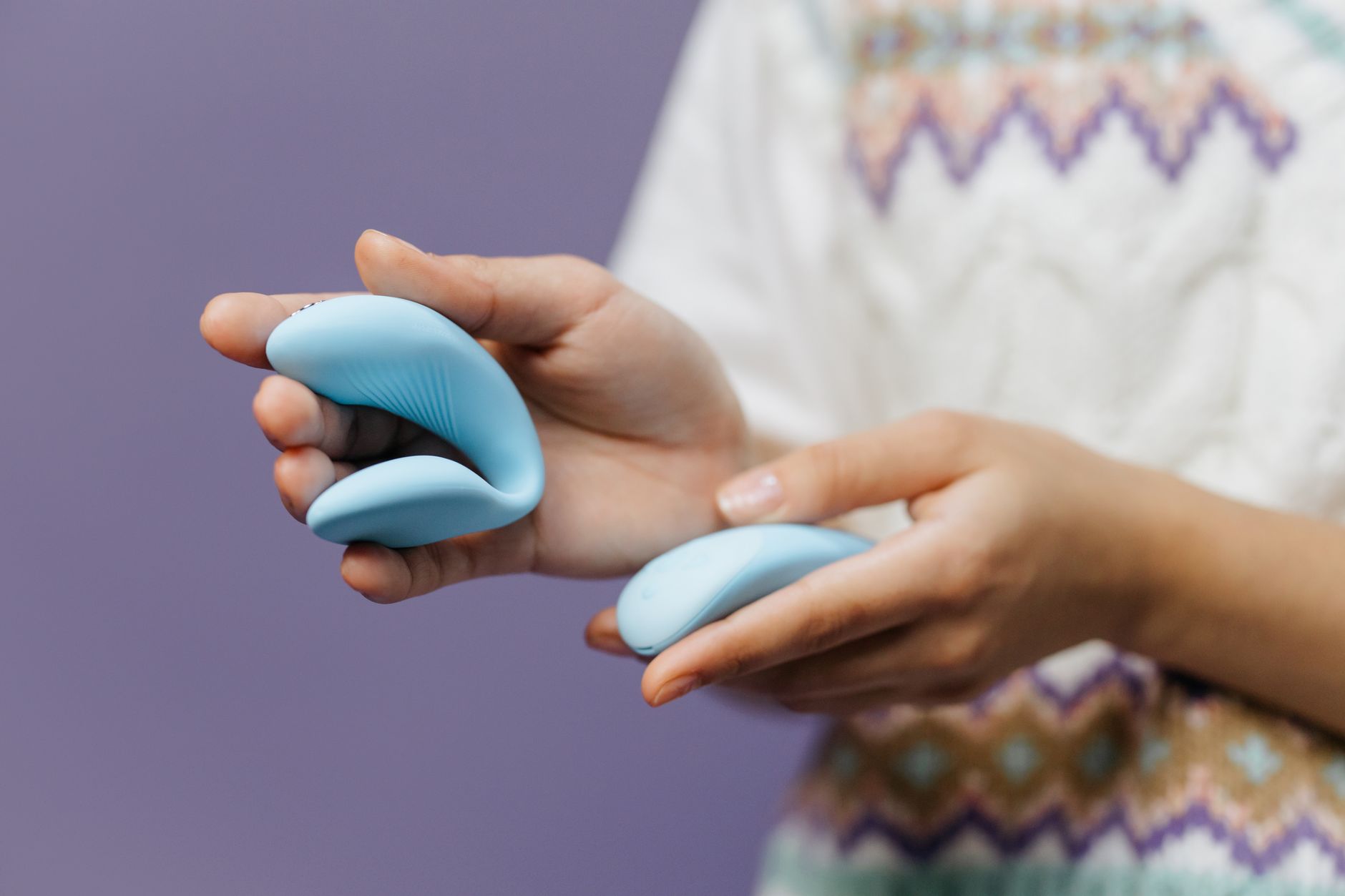
Photo by cottonbro studio on Pexels
What using a lemon vibrator actually does in a disconnected partnership
When emotional distance is the problem, a lemon clitoral vibrator becomes a tool for three things.
First, it removes the pressure on your partner to be the sole source of your pleasure. This is huge. When someone feels like they're failing to turn you on, they often respond by withdrawing more. A vibrator isn't a critique. It's just efficiency. "Your hands are great, and this helps me get there faster. I'd rather spend the mental energy on us than on whether I'm going to come."
Second, it changes the dynamic from performance to presence. When you're using a lemon vibrator, your partner can touch you elsewhere. They can kiss your neck, watch your face, hold your hand. They can be involved without being the center of pressure. Often, this is the first time in months that you're actually looking at each other during sex.
Third, it creates a permission structure to experiment again. Disconnection breeds routine. And routine breeds more disconnection. Bringing something new into the mix, even something as simple as a clitoral vibrator, signals that you're willing to try. That you haven't given up.
The actual logistics (so this doesn't feel awkward)
Start small. You don't need the fanciest lemon adult toy on the market. Something reliable and familiar is better.
Pick a time when you're both already somewhat affectionate. Not a random Wednesday morning. Maybe you've been cuddling, or you've had a good day together. The nervous system matters.
One of you uses the vibrator on the other while they're already aroused. Not as the first move. As one of several. This keeps it integrated instead of making it feel like the toy is doing all the work.
Where to put it depends on what feels good, but most people find that clitoral vibrators work best on external stimulation rather than as a replacement for touch. Your partner can hold it. You can hold it. You can trade off.
The goal is not necessarily orgasm. The goal is presence. If you come, great. If not, that's also fine. What matters is that you're both there.
When lemon vibrators aren't enough
Here's what I tell couples in my practice: a toy can restart physical intimacy, but it can't repair broken communication. If you're emotionally disconnected, you also need to be talking about why.
Are you exhausted? Are you resentful? Did someone say something three years ago that never got processed? Is one of you feeling taken for granted?
A lemon vibrator creates a window of vulnerability. Use that window to ask real questions. "I miss you. What do you miss about us?" "What would help you feel like I see you again?"
If you can't have that conversation, couples therapy is the real tool. A vibrator is just permission to try.
The other thing nobody tells you
Sometimes, when emotional distance is the real problem, reconnecting physically also means reconnecting alone first. Some people need to rebuild their relationship with their own pleasure before they can have pleasure with a partner.
If that's you, using a lemon clitoral vibrator solo gives you back your arousal. It reminds your nervous system what pleasure feels like when there's no performance involved. Then, when you bring that back to your partner, it changes the energy between you.
You're not asking them to turn you on. You're inviting them into something you've already reclaimed for yourself. That's a completely different conversation.
FAQ
Will using a vibrator make my partner feel inadequate?
Maybe, if you don't talk about it first. But if you frame it as "I want more physical presence from you, and this helps me get out of my head," most partners get it. It's not a rejection. It's practical.
What if my partner refuses to try anything new?
That's information. It might mean they're scared. It might mean they're checked out. Either way, it's a conversation you need to have outside the bedroom. If someone won't engage with your sexuality or your desire to reconnect, that's a relational problem that goes deeper than toys.
Does using lemon vibrators mean we're "not enough" for each other?
Nope. Humans use tools. You use tools in every other part of your life. A vibrator is just a tool for pleasure. It's not a referendum on your relationship.
How do I know if this will actually help us reconnect?
You'll know because you'll start being present again. You'll laugh. You'll make eye contact. You'll want to touch each other without it being about sex. The vibrator is just the entry point.
What if we try this and it doesn't help?
Then you need professional support. A couples therapist who specializes in intimacy can help you figure out whether the disconnection is fixable or whether you've grown in different directions. But you won't know until you try something.
Can lemon clitoral vibrators work for same-sex couples too?
Completely. Any partnership where emotional distance has built up can benefit from reclaiming physical intimacy. The tool works the same way. The vulnerability required is the same.
The real ask here
You're not broken. Your relationship isn't ruined. But emotional distance does require intentional work to bridge. A lemon vibrator won't do that work for you. But it can create the conditions where the work becomes possible. Where you can be present instead of performing. Where you can remember what it felt like to want each other.
Start with the conversation. Then, if you're both willing, try something new. The vulnerability is where the reconnection actually happens.