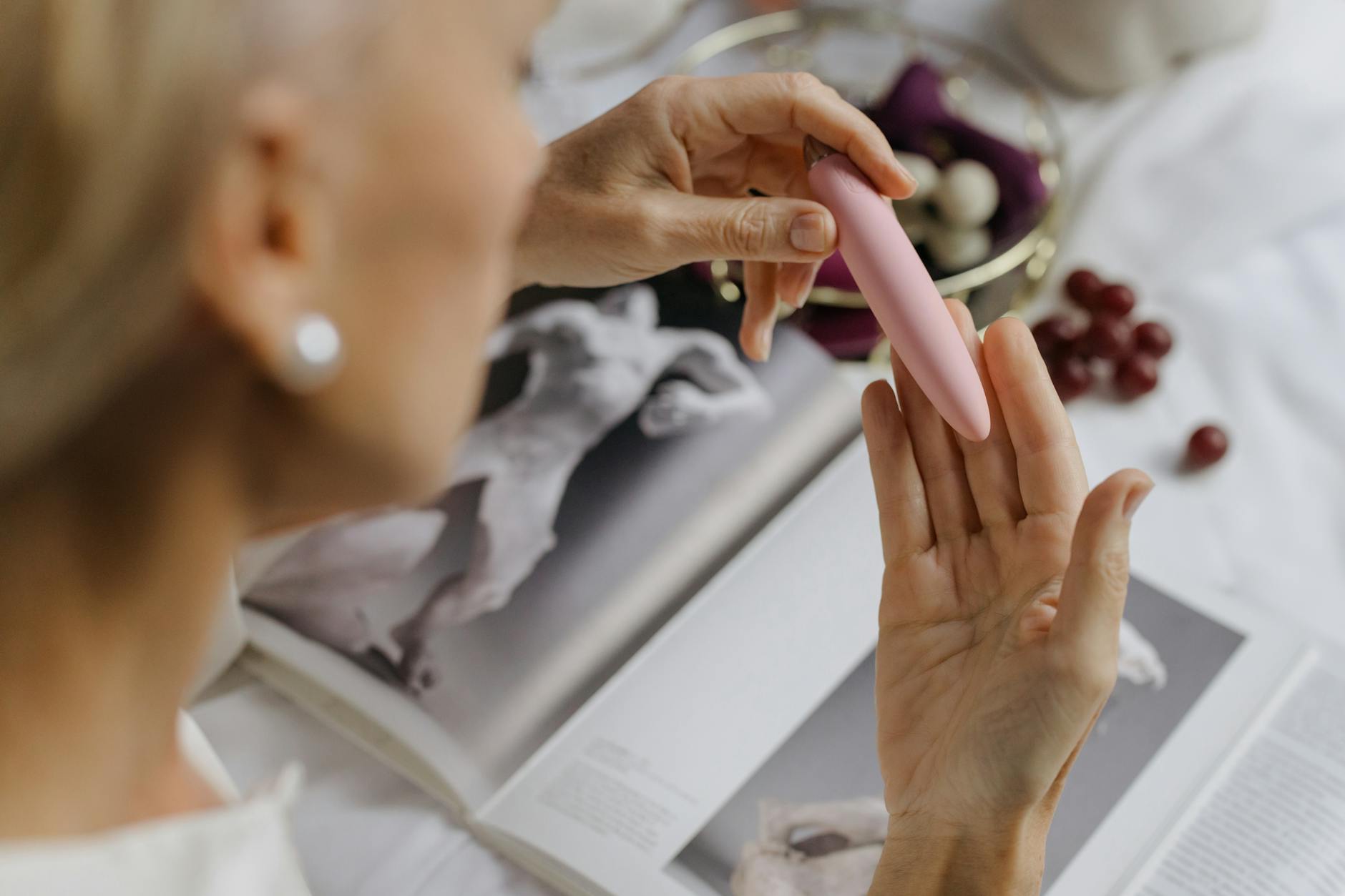
Let's talk about the thing nobody mentions
You bought a lemon vibrator because you heard it would change everything. Then you tried it, and the sensation was so intense it actually hurt. Not in a good way. In a "why does this feel like it's scrambling my nerves" way. So you put it away, told yourself vibrators just aren't for you, and moved on. Here's what I want to tell you straight: that reaction doesn't mean vibrators don't work for you. It means you need a different approach.
Clitoral overstimulation is real, common, and almost never discussed as a legitimate issue. Most conversations assume the problem is sensitivity anxiety or that you're not aroused enough. Sometimes it's neither. Sometimes your clitoris is just genuinely more sensitive to direct vibration than average, and you need to learn how to work with that rather than against it.
Why direct vibration can feel overwhelming
Your clitoris has roughly 8,000 nerve endings concentrated in an area the size of a pea. When a lemon vibrator makes direct contact with that tissue, it's flooding those nerves with stimulation all at once. For some bodies, that's transcendent. For others, it's like someone turned the volume up to 11 when you were expecting a 3.
Add to that: sensitivity varies wildly depending on your cycle, stress levels, medications, and whether you're coming off a period. A lemon vibrator that felt perfect last month might feel intolerable this week. That's not a malfunction. That's your body telling you something real.
The good news: you don't have to accept this. There are at least five concrete ways to use a lemon vibrator successfully with sensitive tissue.
Technique 1: The buffering method
This is the simplest fix and it works immediately. Instead of applying the lemon vibrator directly to your clitoris, place a thin barrier between the toy and your skin.
Your options here are elegant in their simplicity. A microfiber cloth. A pair of underwear (yes, with the vibrator on the outside). A silk pillowcase folded once. Even your own hand pressing gently over the area while the vibrator makes contact through your palm.
The barrier softens the sensation by about 40 to 50 percent depending on what you use. It's not muffling the pleasure. It's translating the vibration into something your nervous system can actually receive instead of brace against. Many people find that once they buffer the first few uses, their sensitivity recalibrates and direct contact becomes tolerable. Not always. But often.
Technique 2: Indirect stimulation
Here's what most people don't realize: the clitoris extends internally. What you see externally is roughly the size of a pea, but the structure spreads underneath the skin, around the vaginal opening, and even along the sides of the vagina. You can absolutely achieve intense pleasure by stimulating all that territory without ever directly touching the clitoral head.
Try running the lemon vibrator along the sides of your clitoris rather than directly over it. Press it against the pubic mound slightly above where your clitoris sits. Use it on the inner labia right beside your clitoral hood. You'll still get substantial stimulation, but it's diffused across a wider area, which means each individual nerve ending gets less intensity.
Many of my clients report that indirect stimulation combined with a lemon vibrator produces some of their strongest orgasms. There's something about the build that feels deeper, less like an assault on one point and more like a wave moving through the whole area.
Technique 3: Pacing and the pulse method
Most lemon vibrators have multiple settings. You probably know this. What you might not have tried: the lowest setting, sustained for longer, often beats the highest setting used in short bursts.
Instead of flicking it to full power and holding it for two minutes, start at setting one. Leave it there for five to ten minutes. Your body acclimates. Your arousal deepens. What felt overwhelming at first becomes integrated into the experience rather than shocking to your nervous system.
You can also use the pulse or pattern modes on lemon vibrators if yours has them. A rhythmic pulse mode often feels less aggressive than a constant hum because it gives your nerves microseconds of recovery between each wave. It's the difference between someone pressing down steadily versus tapping at a fast rhythm.
Technique 4: Positioning your body differently
This one surprises people but it's genuinely effective. The angle at which you use the lemon vibrator changes how intensely you feel it.
If you're lying on your back with your legs open, the vibrator makes very direct contact. Instead, try lying on your side with your legs together. Sit cross-legged. Stand with your knees bent and weight shifted. Each position changes the angle of contact, the amount of surface area touching the vibrator, and therefore the concentration of sensation.
When you're upright or at an angle rather than completely splayed out, the lemon vibrator contacts your clitoris at an oblique angle rather than head-on. That simple physics change can cut the intensity in half while actually increasing pleasure because you're hitting different nerve endings.
Technique 5: Building arousal first, then introducing the vibrator
This is about sequencing, not the toy itself. Many people try a lemon vibrator too early in the arousal process. They're barely warm, not fully lubricated, and their tissue hasn't engorged yet. When you introduce intense vibration to tissue that's not ready, it feels like an unwelcome intrusion rather than pleasure.
Spend ten to fifteen minutes on manual stimulation, kissing, or whatever gets you genuinely aroused before you ever turn on the lemon vibrator. Let your clitoris swell. Let lubrication build. Let your nervous system shift into a receptive state. Then introduce the vibrator at its lowest setting.
You're not changing the toy. You're changing the state of your body when it meets the toy. The same vibrator that felt painful on cold, unaroused tissue will feel entirely different when your body is already activated.
When to seek help
If you've tried all of these approaches and the sensation still feels painful rather than intense, it's worth talking to a healthcare provider. Some conditions like vulvodynia or neuropathic pain respond to stimulation differently, and you might benefit from topical treatments or specialized guidance.
But most of the time, the issue isn't a medical problem. It's just a mismatch between your sensitivity and the default way people assume you should use a vibrator. Fixing that mismatch doesn't require anything expensive or complicated. It requires permission to experiment and the patience to find what actually works for your specific body.
Your clitoris isn't broken. The lemon vibrator isn't wrong for you. You just need a different protocol. Start with buffering, add in indirect stimulation, play with your lowest settings, change your positioning, and prioritize arousal first. One of those techniques, or a combination of them, will unlock something that changes your entire experience.
Frequently asked questions
Can I damage my clitoris by using a lemon vibrator on a sensitive setting?
No. Your clitoris is remarkably resilient. The sensitivity you're feeling isn't fragility. It's your nervous system's appropriate response to intense stimulation. Using the buffering method or indirect techniques won't cause damage and won't permanently desensitize you. You're not risking anything by experimenting with different approaches.
Why does my clitoris feel sensitive sometimes and not other times?
Hormone fluctuations, stress, medications, hydration levels, and where you are in your cycle all affect clitoral sensitivity. A lemon vibrator that felt perfect on day five of your cycle might feel aggressive on day twenty. That's completely normal. Your body isn't being difficult. It's responding to real chemical changes. Adjusting your technique based on where you are in your cycle makes total sense.
Is it normal to prefer indirect clitoral stimulation over direct contact?
Absolutely. Maybe half of people find direct clitoral stimulation most pleasurable. The other half prefers indirect, around the sides, or deeper penetration with clitoral contact happening incidentally. There's no single right way. If you find that a lemon vibrator works best when you're hitting the surrounding tissue rather than the clitoral head directly, that's not a workaround. That's your actual preference.
Does sensitivity to vibration mean I'm broken or there's something wrong with me?
No. Some nervous systems are more sensitive to high-frequency vibration. Some bodies have more concentrated nerve endings in smaller areas. That's not pathology. It's variation. Lots of people with sensitive tissue report having incredibly satisfying sex lives once they learn techniques that work for them. You're not defective. You just need a personalized approach.
Should I use a different toy if vibration feels too intense?
Not necessarily. How to choose between lemon vibrators and other clitoral vibrators covers options, and different designs do have different feels. But before you abandon the lemon vibrator, try the techniques above. The buffering method alone changes the experience dramatically for most people. Give yourself five to seven attempts with a different approach before you conclude it's not for you.
Will my clitoris adjust to vibration if I keep using it?
Maybe. Some people find that after a few weeks of regular use with their preferred technique, they can tolerate more direct contact and higher settings. Others stay sensitive to direct vibration long-term, and that's fine. They just keep using buffering or indirect approaches. You don't have to build up tolerance. You just have to find what works.
Can arousal pills or supplements help with clitoral sensitivity?
No supplement will change your baseline nerve sensitivity. What matters is building genuine arousal before you use the toy, not chemical intervention. Spend time on foreplay. Get your heart rate up. Let your body warm up. That physiological shift does more for clitoral receptivity than anything you could take.
The bottom line
Clitoral overstimulation is one of the most common reasons people abandon vibrators, and one of the easiest to fix. You're not too sensitive. You're not broken. You just need a technique that matches your body instead of fighting it. Start with buffering, try indirect stimulation, dial down the intensity, change your position, and build more arousal first. One of those approaches will work. Then a lemon vibrator won't be something you feel obligated to use. It'll be something you actually want.