
Let's name what's actually happening
One partner wants sex. The other partner doesn't want it as often. This isn't a failure of love or attraction. It's one of the most common friction points in long-term relationships, and it often goes unnamed until it calcifies into resentment.
Here's what I see in my practice: the higher-desire partner starts keeping score. The lower-desire partner feels pressured and shuts down further. Sex becomes something that happens to them instead of with them. Then someone hears about toys, buys one solo, and the whole situation gets worse because now it feels like a Band-Aid on a broken conversation.
Lemon vibrators, and clitoral vibrators in general, can actually shift this. But only if you use them as a language, not a workaround.
The mismatch is real, and it's not about attraction
Desire discrepancy has almost nothing to do with how much someone loves their partner. It's shaped by stress, work demands, body image, past sexual experiences, hormones, medication, confidence, and dozens of other factors that have nothing to do with you.
But here's what happens: the person wanting more sex internalizes the rejection. The person being approached feels guilty and pressured. Both of you become defensive, and sex stops feeling safe. This is where most couples get stuck.
What I tell my clients is simple: toys aren't a substitute for your partner. They're a tool for having a conversation you've been avoiding. Using a lemon vibrator together, or even just talking about it together, forces you to name what's really going on instead of letting it fester.
Why lemon vibrators work differently in this situation
Lemon vibrators and other clitoral vibrators are designed around pleasure, not performance. That distinction matters when one partner is already feeling pressure. Traditional vibrators are often loud, intense, and fast. They can feel clinical. Lemon vibrators use suction stimulation, which mimics what feels good naturally and takes the pressure off "finishing" or "proving" something.
When you're dealing with desire mismatch, you need a tool that depressurizes the whole experience. A lemon vibrator does that. It's not about speed or intensity. It's about sensation, presence, and removing the goal-oriented energy that's usually making things worse.
Also, honestly? Air-suction stimulation from a lemon clitoral vibrator feels genuinely different from fingers or a partner's mouth. It's not better. It's just different, which means it can wake up sensation and interest that felt dormant during partnered sex.
The conversation you need to have first
Do not buy a lemon vibrator and surprise your partner with it. Do not introduce it during sex without talking first. Do not use it as a solution to a problem neither of you has named.
Here's what actually works:
Pick a calm moment outside the bedroom. Not after rejection, not during sex, not when either of you is already frustrated. Say something like: "I've noticed our rhythms are different around sex, and I want us to figure out what's really going on instead of just letting it be a sore spot."
Then listen. Not to convince them or fix it immediately, but to actually understand. Is it stress? Body image? Medication side effects? Low energy from being the mental load manager? Anxiety about performance? Each answer opens a different door.
If they're open to exploring, then you can introduce the idea of toys. Frame it as "something we can explore together," not as a solution or a replacement. A lemon vibrator becomes an invitation, not a band-aid.
How to actually introduce a lemon vibrator
If your partner has lower desire, introducing a toy needs to feel safe and collaborative, not like pressure to perform.
Option one: Go shopping together. Let them hold the lemon vibrator. Explain how it works. Make it exploratory, not pushy. Many couples find that the act of choosing something together removes some of the shame or weirdness.
Option two: Start with solo exploration. Let your partner know you're curious about something new and ask if they'd be comfortable with you using it while they're in the room. Not performing for them, just exploring. This takes the pressure off them while opening the conversation naturally.
Option three: Use it during partnered sex in a way that's collaborative. The lower-desire partner might find that sensation from a lemon vibrator actually makes partnered sex feel better and less obligatory. Sometimes the issue isn't desire. It's that the current approach doesn't feel good.
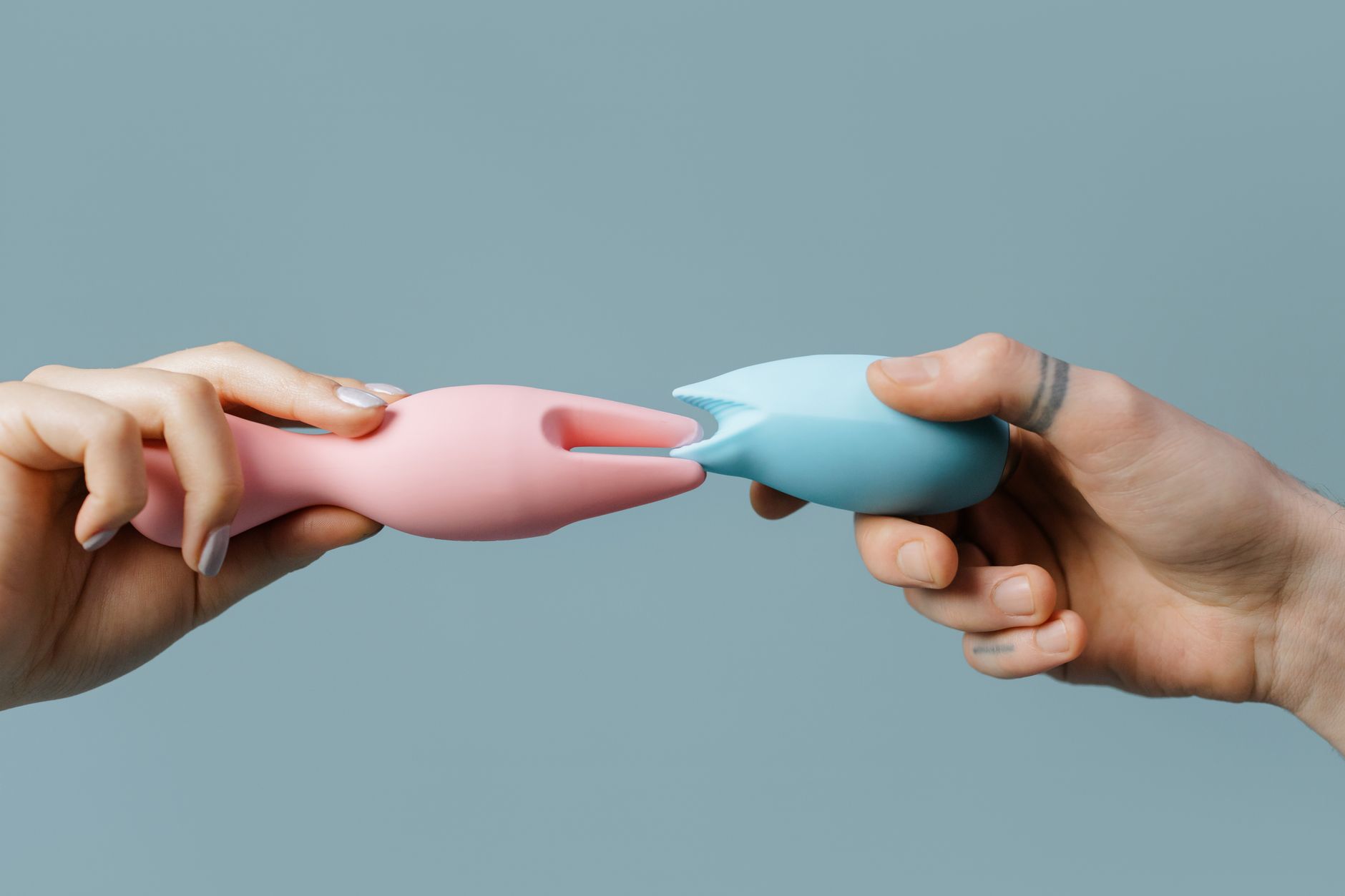
Photo by cottonbro studio on Pexels
What changes when you actually use it together
The magic doesn't happen because the toy is better than your partner. It happens because using it forces you into a different dynamic.
Instead of initiator and resistor, you're now both exploring. The pressure lifts because the focus shifts from "convincing someone to have sex" to "discovering what feels good." That's a completely different energy.
Many couples tell me that after using a lemon vibrator together, they talk more during sex. They name what feels good. They laugh. They become curious instead of defensive. Sometimes the lower-desire partner realizes they actually do want sex, they just wanted something slightly different. Sometimes the higher-desire partner realizes the issue is less about frequency and more about being present.
Using lemon vibrators together also removes the shame spiral. If pleasure is just pleasure, without performance pressure, both partners can show up differently. The lower-desire partner feels less guilty. The higher-desire partner feels less rejected.
The frequency conversation (the one that actually matters)
Let's be clear: toys don't fix desire mismatch. They just make it possible to have an honest conversation about what's underneath.
After you've explored a bit together, you need to talk about what you both actually want and what's realistic. This is where most couples fail because they're trying to match frequencies instead of building connection.
Here's what I recommend: stop thinking about "how often" and start thinking about "what kind." Maybe your partner doesn't want sex five times a week, but they do want intimate touch, or a specific kind of experience, or sex that's slower and less goal-oriented. Maybe you don't need it as often as you thought once the shame is gone.
A lemon vibrator is useful here because it gives you options that aren't just penis-in-vagina sex or nothing. You can have a quick, satisfying experience with a clitoral vibrator without the whole production. You can be intimate without an hour commitment. That flexibility often solves more desire mismatch than any amount of convincing.
When lemon vibrators won't fix this
I need to be honest: if the core issue is disconnection, contempt, or one partner feeling fundamentally unheard, a toy won't fix it. If your partner feels coerced, guilty, or like they're failing you, introducing a vibrator will make it worse.
If that's where you are, you need couples counseling before you need toys. That's not failure. That's just reality. A good therapist can help you get to the conversation that toys alone can't create.
But if the issue is genuine mismatch without contempt, if you both care but you're stuck in a pattern, lemon vibrators can be a real tool for breaking the cycle.
The mindset shift that actually works
Here's what I tell my clients: sex in long-term relationships isn't about keeping score or matching frequency. It's about maintaining the belief that your partner wants good things for you.
When that belief breaks, toys don't matter. When it's intact, a lemon vibrator becomes a way of saying: "I want you to feel good. I want this to be pleasurable for both of us. I'm willing to explore." That message, delivered through genuine curiosity and openness, changes everything.
Your partner doesn't need to initiate sex as often as you do. They need to know you're not keeping score. You don't need to want it all the time. You need to know they're not rejecting you when they're not in the mood. A shared tool, introduced with genuine care, can help you both get there.
Common questions about lemon vibrators and desire mismatch
Will introducing a toy make my partner feel like I'm trying to replace them?
Maybe, if you do it wrong. If you introduce it as "the problem is you," yes. If you introduce it as "I want to explore pleasure with you in a new way," the answer is usually no. Frame it as addition, not substitution. And let them choose whether to participate. Pressure ruins everything.
How do I bring this up without making my partner feel bad about their lower desire?
Don't lead with the toy. Lead with curiosity about what they actually want. "I've noticed things have shifted and I'm wondering what's going on for you" is so much more effective than "let's try this vibrator." Once you understand what's real, introducing a tool makes sense in context.
Can we use a lemon vibrator during sex if my partner doesn't usually want sex?
Yes, but that's not the primary goal. The primary goal is creating an environment where your partner's lower desire isn't a shame spiral for either of you. Once that shifts, using toys together is natural. Forcing it before the foundation is solid makes it worse.
What if my partner thinks toys mean they're not enough?
Then you haven't had the right conversation yet. A toy isn't about you not being enough. It's about pleasure being complex and bodies being mysterious. A good partner wants their person to feel good, period. If that conversation isn't landing, a relationship coach or therapist can help frame it in a way that clicks.
Is it weird to use a lemon vibrator if we've been together for years without toys?
Not even slightly. Couples reinvent themselves all the time. Adding something new doesn't erase years of history. It's just saying "we're still exploring." That's actually a healthy sign.
How often should we use toys together if we're trying to bridge the desire gap?
There's no formula. The goal isn't frequency. It's removing the shame and pressure so you can both show up authentically. If using a lemon vibrator together once a month helps you feel connected and stops the resentment cycle, that's a win. If you never use it but just having talked about it shifted the energy, that's also a win.
The real shift
Lemon vibrators aren't magic. They're just tools. What's magic is what happens when you use them as an excuse to have an honest conversation about what you actually want and what your partner actually wants.
Desire mismatch in relationships is one of the loneliest things. You're lying next to someone and feeling rejected. They're lying next to someone and feeling pressured. Both of you are unhappy and it feels unsolvable.
But it is solvable. It just requires naming it, listening, and being willing to explore differently. A lemon vibrator can be the starting point for that. It's not about the toy itself. It's about what the toy represents: a willingness to show up for each other's pleasure, a commitment to keep exploring even after years together, and an agreement that this matters enough to get curious about.
That's what actually heals desire mismatch. Not frequency. Not toys. But the belief that you're in this together.
If you're ready to start that conversation, or if you want support navigating it, I'm here. Reach out at the link below.