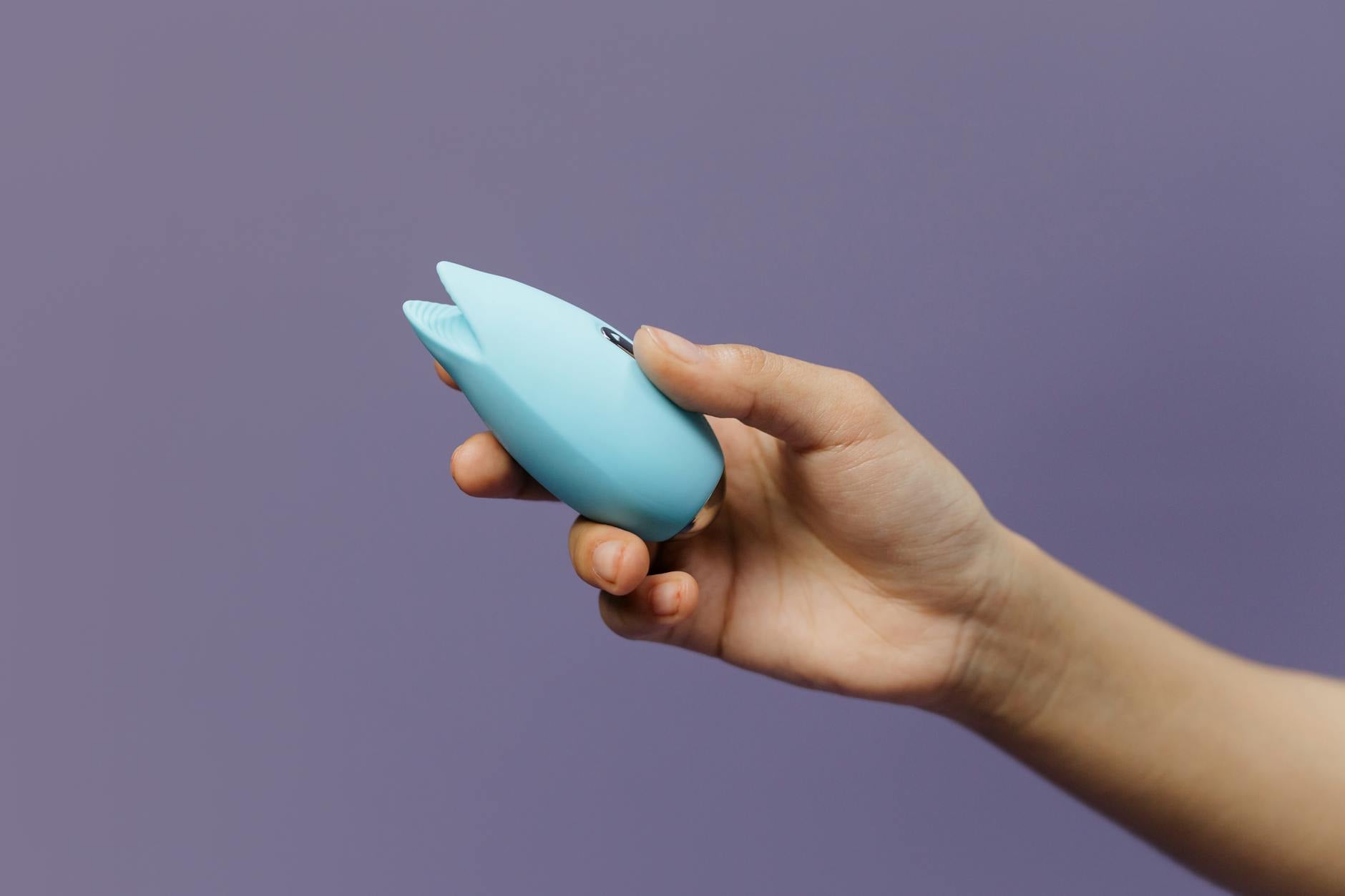
How Long Should Lemon Vibrators Actually Take to Work?
Let's be real. You unwrap a new lemon clitoral vibrator, settle in, turn it on, and then... nothing happens for a solid minute. So you turn it up. Nothing still. You start wondering if you broke it, if your body's "broken," or if everyone else is just faking it.
None of that is true. Lemon vibrators work on a completely different timeline than traditional vibrators, and knowing this difference is the difference between "this toy doesn't work for me" and "oh, this is actually incredible."
The First Two Minutes Matter Most
Here's the thing about lemon suction technology. It doesn't create instant sensation the way a high-frequency vibrator does. Instead, it builds. The suction creates a gentle seal, and over 90 to 120 seconds, your tissue engorges with blood. That's when you start feeling it.
This is not a flaw. This is actually a feature.
Traditional vibrators hit immediately because they're creating surface-level stimulation. You feel the vibration right away. Lemon vibrators, like the popular Lem model from Hello Nancy, work differently. They're stimulating nerve bundles through progressive blood flow and gentle pressure changes. That takes a moment to register in your body.
Most people who abandon a lemon vibrator in the first 60 seconds do so because they expected the sensation to arrive on the timeline of a traditional toy. When it doesn't, they assume it's not working. The reality is almost exactly the opposite. You're just not at the good part yet.
Budget 3 to 5 minutes minimum before deciding whether a lemon vibrator is doing anything for you.
Why Different Bodies Have Different Timelines
The amount of time a lemon vibrator takes to "work" also depends heavily on your baseline arousal level and tissue sensitivity.
If you're starting from a place of genuine interest and your body is already somewhat engaged, you might feel noticeable sensation within 60 to 90 seconds. The tissue is responsive. The blood is moving. The lemon's suction finds something to work with.
If you're starting from neutral, or if you're using a lemon vibrator when you're not fully in the mood, it might take 2 to 3 minutes before anything registers as pleasurable. That's not the toy failing. That's your body moving through its arousal phase at its own pace.
This is especially true for anyone managing lower arousal, whether that's medication-related, hormonal, stress-related, or just "it's been a while." A lemon clitoral vibrator still works beautifully in these situations. It just might require a slightly longer warm-up window. Some people find that 5 to 7 minutes in, the sensation becomes intense and surprising.
One more factor: where you are in your menstrual cycle, or whether you're post-menopausal, affects tissue thickness and blood flow. Some days a lemon vibrator clicks into gear faster. Other days, patience buys you better results. Both are completely normal.
The Difference Between "Working" and "Amazing"
Here's a distinction that matters. A lemon vibrator might start creating noticeable sensation after 2 minutes. But the truly intense, full-body experience? That often peaks somewhere between 8 to 15 minutes in.
This is because you're not just feeling stimulation. You're building arousal on top of it. The more you stay with it, the more your body responds, the more the sensation deepens. This is different from a traditional vibrator, where the intensity is often front-loaded. You hit the toy, you feel it immediately, and the intensity plateaus relatively quickly.
With lemon vibrators, there's often a rolling escalation. Minutes 2 to 4 feel good. Minutes 5 to 8 feel significantly better. Minutes 9 to 15 can feel wildly intense in a way that surprises you.
This means that if you give up after 3 or 4 minutes, you're potentially missing the part that actually changes things.
Pattern and Intensity Settings Also Affect Timing
A lemon vibrator typically has multiple patterns and intensity levels. Which one you start with also changes your timeline.
If you start with pattern 1 at intensity level 1, the buildup is slow and gradual. You might not feel anything significant until minute 3 or 4. This is great if you're building to something with a partner, or if you like a very gentle warm-up.
If you jump to pattern 2 or 3 at a higher intensity, you'll likely feel noticeable sensation faster. Maybe within 90 seconds. The trade-off is that the sensation might plateau sooner.
Most people find that they're happiest starting low and increasing gradually over the course of 5 to 10 minutes. This approach gives you the most nuance. You feel the gentle beginning. You feel the building intensity. You can adjust patterns as your body signals what it wants.
There's no "correct" approach here. This is about learning your own body's preferences and giving the tool enough time to show you what it can do.
When Something Actually Isn't Working
Okay, so you've given a lemon vibrator 10 minutes. You've tried different patterns. You've got good lubrication. You're genuinely in the mood. And it still feels like nothing.
First question: are you making good contact? A lemon vibrator creates suction. If the seal isn't tight, you won't feel much. This is a quick fix. Adjust your position slightly. Make sure the opening is fully covering your clitoris. Often, a tiny shift makes all the difference.
Second: lubrication matters more than you'd think. Even though these are designed for wet application, some people find that adding a little extra water-based lubricant helps the seal work better. It sounds counterintuitive, but the right amount of lubrication actually improves the suction effect.
Third: if you've been using traditional vibrators exclusively for years, your nervous system might be calibrated to expect a certain type of stimulation. A lemon vibrator feels completely different. It takes a few sessions sometimes before your body "gets it." This is not failure. This is adjustment.
If you've genuinely tried all three of those things and a lemon vibrator still isn't creating any sensation after 15 minutes, it's possible that this particular tool isn't the right fit for your body right now. And that's fine. Some people prefer the directness of traditional vibration. There's no judgment in that.
But statistically? Most people who think a lemon vibrator isn't working simply haven't waited long enough or adjusted their expectations about what the sensation is supposed to feel like.
The Partner Timeline Is Different Too
If you're using a lemon vibrator with a partner, the timeline shifts again.
When someone else is controlling the toy or using it on you, there's an additional layer of arousal happening. You're also getting mental stimulation from the intimacy. Often, the sensation registers much faster. Some couples report noticeable results within 60 to 90 seconds.
The longer play session also tends to be more satisfying. Partners often intuitively know to build slowly, which creates that gorgeous escalation that makes lemon vibrators so effective. You're getting 10 minutes of foreplay built in before the toy does its real work.
If you're trying a lemon clitoral vibrator for the first time with your partner, let them know that the warm-up time is part of the design. "Give it 2 to 3 minutes before you expect to feel much" is a conversation worth having.
How to Know You're in the Good Zone
So when are you officially experiencing what a lemon vibrator is actually capable of?
You'll know it when the sensation shifts from "okay, something's happening" to "oh, this is good." That moment usually arrives between 3 and 8 minutes in, depending on your arousal level and which pattern you're using.
At that point, the feeling is usually less about the individual vibration and more about a building pressure and pleasure. It might feel like suction, or like pulsing, or like a concentrated wave of sensation. Everyone describes it slightly differently because everyone experiences it slightly differently.
The key sign that it's working: you'll start thinking about it less and feeling it more. You'll stop wondering if something's happening and start being present with what's actually happening.
Once you're there, you can stay there for 5 to 20 minutes, depending on where you are in your arousal cycle and what you're looking for. Some people reach orgasm within that window. Some people don't, and that's completely fine. Pleasure doesn't always need an orgasm endpoint.
The Real Timeline
Here's the honest version: lemon vibrators take longer to "work" than traditional toys in the first minute or two. But they also create a depth and progression of sensation that many people find more satisfying overall. You're trading quick-hit intensity for deeper, longer-lasting pleasure.
Give yourself at least 3 to 5 minutes. Ideally 10. Adjust position if you're not feeling suction. Use extra lubricant if things feel dry. Start with a lower intensity and work up. And remember that your body learns with each session. The second time might feel completely different from the first.
That's not a problem. That's your nervous system figuring out something new. Stick with it long enough to find out what you've been missing.
People Also Ask
Why does my lemon vibrator take longer to work than my other toys?
Lemon vibrators use suction and pulsing rather than continuous high-frequency vibration. This mechanism requires a few moments for blood to engorge tissues and for your nervous system to register the sensation. Traditional vibrators hit surface nerves immediately. Suction works deeper and takes slightly longer to feel. It's not slower in a bad way. It's a different sensation altogether.
Can you use a lemon vibrator if you have low libido or low arousal?
Absolutely. In fact, many people find that lemon clitoral vibrators are particularly helpful when arousal is lower. The longer warm-up time often works better for bodies that take time to engage. Just budget 5 to 10 minutes rather than 2 or 3. Some people also find that combining a lemon vibrator with longer foreplay, or using it with a partner, helps arousal build more naturally.
What if I don't feel anything after 10 minutes?
First, check your seal. Make sure the opening is making full contact with your clitoris. Second, add a bit more water-based lubrication. Sometimes that improves the suction effect. Third, try a different pattern or intensity. And finally, remember that your body might just need a session or two to adjust to a new sensation. Not every toy works for every person, but most people who think a lemon vibrator didn't work simply didn't give it enough time.
Do lemon vibrators work better with a partner?
They work differently with a partner, not necessarily better. The added intimacy and arousal often means sensation registers faster. Partners also tend to intuitively build slowly, which plays to the lemon vibrator's strength. Solo play can be equally satisfying, just with a slightly longer warm-up window. You're looking at 3 to 5 minutes solo versus maybe 90 seconds to 2 minutes with a partner.
Is it normal for lemon vibrators to feel less intense than traditional toys at first?
Completely normal. The intensity profile is different. Traditional vibrators feel strong immediately. Lemon vibrators feel subtle at first and then build. After 5 to 10 minutes, many people find that they're actually more intense than what they've experienced before, just in a different way. It's a sensation that evolves rather than a sensation that starts high and stays steady.
Should I use more lubrication with a lemon vibrator?
Yes and no. Lemon vibrators are designed for wet application, and natural lubrication works beautifully. But some people find that a little extra water-based lubricant actually improves the suction seal and makes the sensation work better. Think of it like helping the device make optimal contact. Experiment with how much works best for your body.
If you're still figuring out how to get the most from a lemon vibrator, or if you have specific questions about your body and what might work best, that's exactly what we're here for. Reach out to Hello Nancy with your questions. We're not here to sell you something that doesn't fit your life. We're here to help you find what actually works.