Let's talk about what nobody explains
Here's the thing: pleasure doesn't expire at 50. But the operating manual changes, and most people don't get handed the updated version.
I work with women navigating this transition all the time, and the pattern is always the same. They notice something feels different. They assume it means game over. It doesn't. It means you're working with a different body, and different bodies need different approaches.
What actually changes after 50
Your tissue thins. Estrogen drops, and that's the main driver. The vaginal wall becomes less elastic, lubrication takes longer to arrive, and the clitoral glans (the external tip you can feel) becomes slightly more sensitive to direct pressure in ways that can feel uncomfortable rather than good.
The neural pathways don't change. Your brain still fires up the same way. The clitoral nerve density stays constant. What shifts is purely mechanical: less cushioning, less natural lubrication, slower arousal ramp-up.
Here's what most conversations skip: some of my clients report their most intense orgasms happen after 50. This isn't a consolation prize story. It's what I actually observe. The difference is that the route to get there looks different.

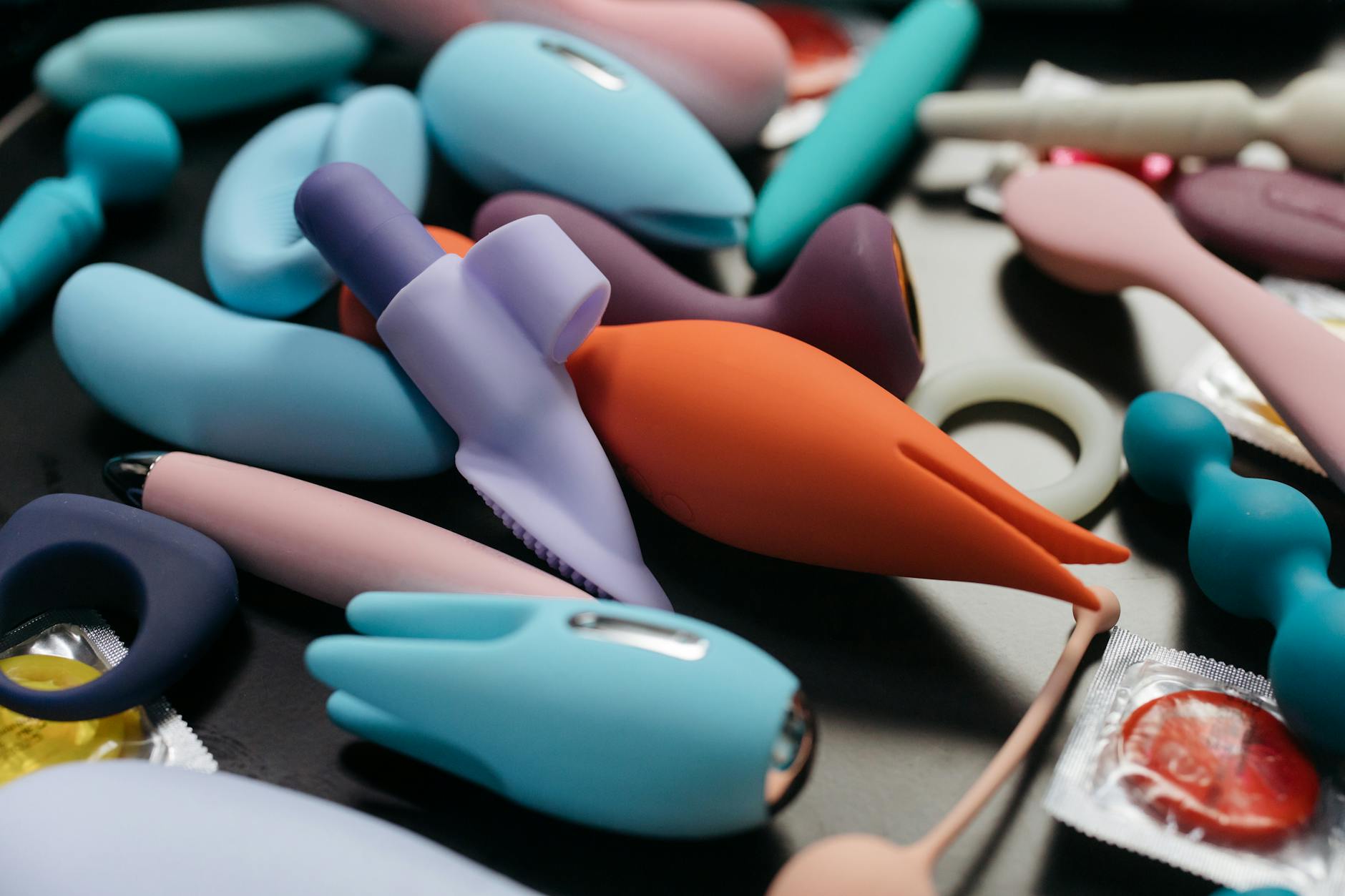
Photo by Olga Lioncat on Pexels
Why air-suction vibrators work better for sensitive tissue
Lemon vibrators use suction rather than traditional vibration. This matters more after 50 than it does at 30.
With direct vibration, you're creating rapid repetitive pressure against tissue that has less elasticity. That can feel sharp, overwhelming, or just plain irritating. With suction, you're creating a gentle pull and release that stimulates the nerve endings without the same mechanical force.
Think of it this way: a lemon clitoral vibrator like the Lem works on the same principle as a clitoral suction toy, but designed for the specific sensitivity shifts that happen with aging. The tissue responds to the varying pressure gradient rather than to vibration speed. For women over 50, that's often the difference between "this is uncomfortable" and "this is exactly what I needed."
I also see that suction-based toys tend to build arousal more gradually, which aligns better with how bodies over 50 actually function. You're not trying to force a fast ramp-up. You're inviting the body to respond in its own time.
The three practical adjustments that matter most
One: water-based lubricant is non-negotiable. Not because something is wrong with you. Because thinner tissue benefits from it. A good water-based lube keeps friction minimal and makes the sensation smoother. This is honestly the single most impactful change most women report.
Two: expand your warm-up window. Arousal takes longer. Budget 20 to 30 minutes instead of expecting to go from zero to sixty in five. This isn't a limitation. It's actually an advantage if you have a partner, because it forces the two of you to slow down and reconnect.
Three: learn your own rhythm first, solo. Before you integrate anything new with a partner, spend time alone exploring how your body responds now. The clitoral vibrators and toys that worked at 40 might not be your favorites at 55. That's okay. Your pleasure preferences have evolved, and you deserve to know what they are.
The emotional piece is bigger than the physical piece
Here's what I notice that the medical literature doesn't always capture: the biggest shift at 50 isn't biological. It's psychological permission.
For decades, many women have been calibrating their pleasure around someone else's timeline, comfort level, or expectations. Post-50, that pressure often lifts. Kids might be launched. The cultural messaging about what you're supposed to want quiets down. You're finally allowed to care about your own sensation.
Sometimes what looks like "desire fading" is actually permission to finally stop performing. And sometimes it's the opposite—women in their 50s often report discovering what actual pleasure feels like for the first time, because now they can explore without guilt or worry.
That's worth protecting. If you have a partner, naming this shift matters. "My body is changing" is different from "I'm not interested anymore." Separate those conversations, because they need different solutions.
Why lemon vibrators specifically help
Lemon clitoral vibrators address the physical realities of aging tissue without requiring you to change your core preferences. If you liked clitoral stimulation before 50, you'll probably still like it. But you might need a different delivery method.
The suction-based mechanism of a lemon vibrator means you're not relying on rapid vibration intensity. You're working with gentle pressure variation. For sensitive tissue, for women who found traditional vibrators too intense before, and especially for women over 50, that's often transformative.
I've had clients tell me they resisted trying anything new, convinced that pleasure was just dampening with age. Then they tried a lemon clitoral vibrator and realized their body hadn't changed. It just needed a different tool.
When to talk to a doctor
If pain appears during sex, that's a signal to reach out. Genitourinary syndrome (tissue atrophy) is real and completely treatable, usually with topical estrogen creams that have minimal systemic absorption. A conversation with your GP or gynecologist can solve this in weeks.
If you're taking medications that affect arousal—certain antidepressants, blood pressure meds—that's worth revisiting with your doctor too. Sometimes a small adjustment helps more than a new toy.
But if the issue is purely that sensation feels different and you're looking for ways to make pleasure work better, that's where exploration comes in. Different doesn't mean worse. It just means different.
Building pleasure practices that last
One thing I tell every woman over 50: your sexual prime doesn't happen in your 20s. It happens when you finally stop apologizing for having desires.
That might mean investing in a lemon clitoral vibrator and giving yourself permission to use it. It might mean having an actual conversation with your partner about how your body works now. It might mean blocking out time for pleasure the way you'd block out time for anything else that matters.
The pleasure doesn't end at 50. The pressure to perform does. And that trade-off is almost always worth it.
If you're navigating relationship shifts alongside physical changes, or if you're trying to figure out how to talk to a partner about this, I'd love to help. Reach out at Hello Nancy's contact page—this is exactly what I work with couples on.
FAQ: Common questions about aging and pleasure
Does sensitivity really increase after 50?
Yes, but not everywhere equally. The clitoral glans can become more sensitive to direct pressure, which is why switching from traditional vibration to suction-based clitoral vibrators often helps. Other areas might feel less sensitive. It's not one simple shift—it's a recalibration.
Can you still have orgasms the same way you did before?
Often, but the path there might look different. Some women report deeper, more full-body orgasms after 50. Others find their most intense pleasure comes from a different style of stimulation than what worked before. The capacity is there. The route just changes.
Is it normal to need more time to get aroused after 50?
Completely normal. Arousal takes longer because the physiological cascade unfolds more slowly with lower estrogen. This is why extending your warm-up time is so helpful. You're not broken. Your body is just working at a different pace.
Do lemon vibrators work for women over 50 with partners?
Absolutely. In fact, introducing something new together can reignite connection. The key is framing it as exploration, not as a fix for a problem. "I'm curious about this" lands differently than "something's wrong with me."
Should I be using hormone therapy before trying new toys?
That's a personal choice between you and your doctor. Hormone therapy can help with tissue health and arousal, and it doesn't mean you can't also explore new tools. They work together. Talk to your GP about what makes sense for your situation.
What if nothing feels good anymore?
That's worth investigating with a healthcare provider, because it might point to something addressable (medications, hormone levels, relationship stress). But also give yourself time to explore. Sometimes you just haven't found the right tool yet. A lemon clitoral vibrator might be that tool. Or it might be something else. The point is trying.
The bottom line
Pleasure doesn't end. Bodies change. The women I work with who embrace that shift—who invest in tools like lemon vibrators designed for aging tissue, who protect their pleasure the way they'd protect anything else important—are the ones who report their 50s and beyond as genuinely their best years. Not because nothing changed, but because they stopped pretending change meant loss.
Your pleasure matters. Your body matters. And you deserve tools that actually work for the body you have now, not the body you had at 25. A lemon clitoral vibrator is one of those tools. There are others. The invitation is to find out what works for you.