Here's the thing about toys and partners
Introducing a lemon vibrator into partnered sex isn't about your relationship being broken. It's about being curious enough to try something that might make both of you feel better. And honestly, couples who can have that conversation tend to have better sex and better communication overall.
The tricky part isn't the toy. It's the conversation before the toy shows up.
Why the conversation matters more than the equipment
A clitoral lemon vibrator is just plastic and suction. What makes it complicated is the story you're both carrying about what it means. For some people, a toy feels like an admission that penetration isn't enough. For others, it feels like a partner is signaling dissatisfaction. Neither of these things is true, but they're real feelings that need naming.
Here's how I talk couples through it: separate the two conversations. One conversation is "I want to try something new that feels good in my body." The other is "I want us to reconnect" or "I'm not satisfied" or "I want to deepen intimacy." If you tangle them together, the toy becomes a symbol of whatever's underneath, and that's never what you actually want to discuss.
Start with the solo part first. Use a lemon vibrator on your own, understand how your body responds, and then come to the conversation knowing what you like. You're not asking your partner to figure out your pleasure. You're bringing knowledge to the table. That changes everything.

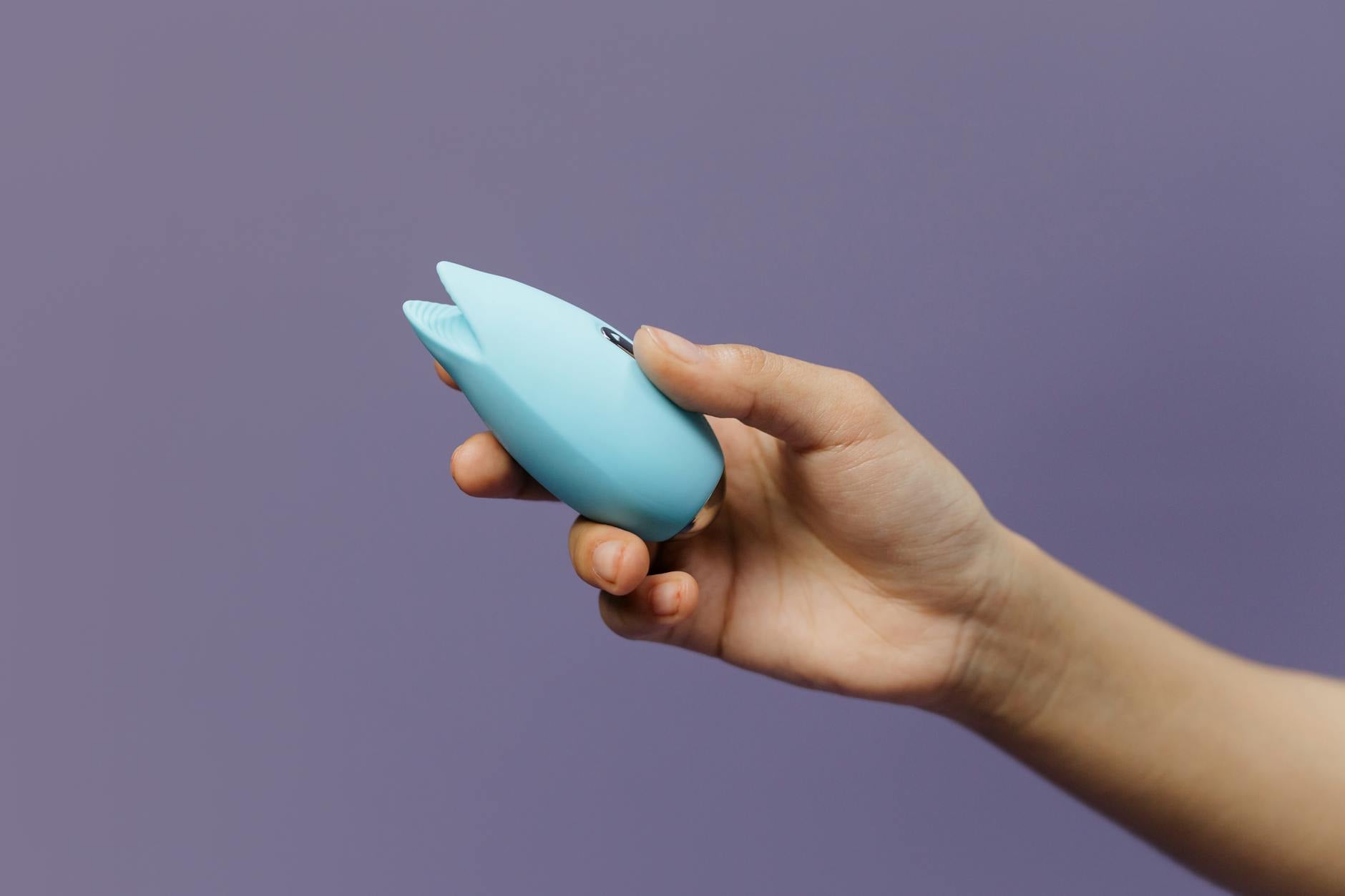
Photo by FounderTips on Pexels
Three positions that work with a lemon vibrator
The beauty of a clitoral lemon vibrator is that it's small, quiet, and doesn't require your partner to do anything different. You're not restructuring the entire experience. You're adding one element. This makes integration much easier than, say, a wand that demands specific positioning.
Position one: you on top, in control. You ride your partner (in any orifice you prefer) and hold the lemon vibrator against your clitoris. Your partner isn't managing the toy. They're present and connected to you, but you're entirely in charge of speed, pressure, and sensation. This is the least intimidating entry point because it's the least dependent. A bonus: you can make eye contact the whole time, which keeps the emotional intimacy high.
Position two: side by side, facing each other. Your partner is inside you (or you're grinding against each other) and you hold the lemon vibrator, or they do. You're completely visible to each other. There's less pressure to "perform" because you're not worrying about your body's visibility from behind. Some people find this positioning more intimate because the vulnerability is mutual.
Position three: you from behind, partner in front. Your partner can move freely while you manage the lemon vibrator. Some partners find it erotic to watch you pleasure yourself while they're inside you. Others find it awkward. Talk first, then try. The beauty of this positioning is that if it feels off, switching takes five seconds.
Why a lemon sucker feels different with a partner present
When you're alone, you're entirely in your head. With a partner, there's a witness to your pleasure. For some people, that's deeply erotic. For others, it's weirdly vulnerable at first and then erotic once you adjust.
Clitoral suction toys like the lemon vibrator create a sensation that's less about friction and more about sustained pressure and release. When a partner is watching or participating, you might notice you're more aware of the sensation because you're partly monitoring their reaction to you. This isn't bad. It's just different.
Some couples find that having a partner present actually helps because you're less in your own head about "am I taking too long" or "is this weird." You're focused on the connection instead of the logistics.
Others prefer to use the lemon vibrator solo and then transition into partnered sex without it. There's no rule. The rule is that you both get to feel good and you both get a say.
Communication that doesn't kill the mood
Honestly, the sexiest couples I work with are the ones who can say "that's too much pressure" or "I want to try a different setting" without it becoming a whole thing. They check in quickly, they adjust, and they move on. No performance. No hurt feelings. Just practical partnership.
You don't need a formal conversation mid-sex. You need permission to speak. That permission gets established beforehand. "If something doesn't feel good, I'm going to tell you directly. It won't mean I don't want to keep going. It just means I want to feel better." That's it.
Some couples use the lemon vibrator and discover that they actually prefer partnered sex without it. That's fine. You tried something. It didn't land. You know more about each other now. That's a win.
Other couples find that the clitoral lemon vibrator becomes a regular part of their sex life. They know which position works best. They know the rhythm. They've normalized it into their own specific version of partnered intimacy. That's also a win.
The insecurity question nobody asks directly
Let's name this: if you're introducing a toy, there's sometimes a partner who thinks it means they're not enough. Here's what I tell people in my practice. A toy doesn't provide what a partner provides. A toy can't kiss you or whisper or adjust based on your emotional state. What a toy does is offer a specific kind of stimulation that's consistent and doesn't get tired.
Your orgasm with a toy isn't better than your orgasm with a partner. It's just different. And sometimes different is exactly what your body needs to feel pleasure more intensely. That's not a reflection on your partner. It's physiology.
If your partner is struggling with this, here's the conversation: "I love having sex with you. I also want to explore sensations that feel good in my body. Both things are true." You're not asking them to feel inadequate. You're asking them to be curious about your pleasure instead of threatened by it.
One thing that genuinely helps: have your partner involved in the research. Look at lemon vibrators together. Read reviews together. When they're part of the selection process, they feel less like an intruder and more like a co-conspirator in your mutual pleasure.
When to use it and when to skip it
You don't need to use a lemon vibrator every time you have sex. You're not replacing anything. You're expanding your toolkit. Some nights you'll want pure partnered sensation. Other nights you'll want that added element. You get to choose based on what sounds good to you that day.
Honestly, the couples who struggle most are the ones who feel obligated to use the toy once they've introduced it. You don't have that obligation. Your pleasure is yours to design. If that means sometimes with and sometimes without, that's completely normal.
The practical stuff
Water-based lubricant is your friend. If you're combining penetration with clitoral stimulation, lubrication keeps everything comfortable and smooth. Wash your lemon vibrator before and after. Communicate about battery levels so nobody's interrupted by a dead toy at the wrong moment. And keep it accessible but not awkwardly visible if you're not out about toys yet.
If you're using your device with a partner for the first time, consider starting with lower intensity settings. Your body is already managing sensation from your partner plus sensation from the toy. You don't need maximum suction on day one.
When to reach out for help
If the toy creates distance instead of connection, or if it becomes a source of shame or resentment, that's worth talking through with a therapist who specializes in sex and relationships. Sometimes a toy is just a toy. Sometimes it's a symptom of something deeper that needs professional attention. Both scenarios are okay. Getting support is the smart move.
Introducing a clitoral lemon vibrator into partnered sex is genuinely one of the kindest things you can do for your relationship. You're saying: "I want to explore pleasure with you. I want us both to feel good. I trust you enough to be vulnerable about what my body needs." That's not awkward. That's intimacy.
People also ask
Can I use a lemon vibrator during penetration?
Absolutely. Most people find it's easiest when they're on top or side-by-side, because you have control of the toy and don't have to rely on a partner to hold it steady. If a partner is holding it, communication matters even more because they need to track your pleasure in real time. Start with lower intensities and move up once you understand how the sensations layer together.
Will a lemon vibrator make me less interested in partnered sex?
No. If anything, couples who introduce toys together report more consistent pleasure and fewer gaps in desire. When you have reliable access to orgasm, you're more likely to want sex, not less. The toy isn't a replacement. It's a tool that makes partnered sex more satisfying.
How do I bring it up without sounding like I'm unsatisfied?
Frame it as curiosity, not criticism. "I read about lemon vibrators and I'm curious what that sensation is like. Want to explore it together?" You're not saying your partner isn't enough. You're saying you want to expand what you both experience. That's an invitation, not a complaint. If they say no, respect that. If they say yes, you've just created an adventure together.
What if my partner feels threatened by the toy?
That feeling is real and it's worth taking seriously. Have a conversation when you're not in bed. Ask what feels threatening about it. Sometimes it's insecurity. Sometimes it's a deeper worry about intimacy or connection. Once you understand what's underneath, you can address the actual concern instead of the toy itself. Many partners feel better once they've participated in choosing it or used it alongside their partner.
Do I need a specific type of lemon vibrator for partnered use?
The best lemon vibrator for partnered sex is the one that feels good in your body and matches your sensitivity. Some people prefer the quiet, precise stimulation of a lemon clitoral vibrator. Others want something with more surface area. There's no "best" type for couples. There's only the best type for you. Solo exploration first helps you know what you actually want to bring into partnered play.
Can we use a toy if we've never talked openly about sex before?
Introducing a toy can actually open that conversation, but it requires patience. Start with small talk. "I want us to feel good together" is enough of an opener. If direct conversation feels impossible, consider working with a relationship therapist who can help you both build communication skills. That foundation matters way more than any toy ever will.
Your pleasure matters. Your partner's pleasure matters. The conversation between you matters most of all. A lemon vibrator is just the catalyst. What you build with that catalyst is yours to decide.